If you’re trying to lose weight, you’ve probably wondered whether you should stop eating rice or reduce the number of rotis on your plate. In Pakistani households, where roti and rice are everyday staples, giving up either can make healthy eating feel unnecessarily complicated.
The good news is that you don’t have to eliminate either food. Both roti and rice can be part of a balanced weight-loss diet. What matters most is how much you eat, what you eat alongside them, and your overall daily calorie intake.
Roti vs Rice for Weight Loss: Which Is Better?
Whole-wheat roti generally contains more fiber and protein than white rice. This can help you feel satisfied after a meal, particularly when you pair your roti with vegetables and a good source of protein.
However, rice isn’t automatically fattening. A sensible portion of rice served with daal, chicken or vegetables can be just as compatible with your weight-loss goals. The important thing is to understand the nutritional differences and choose portions that suit your needs.
Roti vs Rice Calories and Nutrition
Here’s how one medium whole-wheat roti compares with half a cup of cooked white rice.
| Nutrient | 1 medium roti (30 g atta) | ½ cup cooked white rice |
|---|---|---|
| Calories | 100–110 | 100–105 |
| Carbohydrates | 21–23 g | 22–23 g |
| Protein | 3–4 g | 2 g |
| Fiber | 2–3 g | Less than 1 g |
These are approximate values for plain roti without ghee and rice cooked without added oil. A larger roti or a heaped serving of rice will contain more calories.
Does Roti Keep You Full Longer Than Rice?
Whole-wheat roti contains dietary fiber, which slows digestion and can support a longer-lasting feeling of fullness. This may help you manage hunger between meals.
White rice contains less fiber, but that doesn’t mean you’ll feel hungry immediately after eating it. Combining rice with chicken, daal, vegetables or yogurt creates a more balanced and satisfying meal.
How Many Rotis or How Much Rice Should You Eat for Weight Loss?
There isn’t one ideal portion that works for everyone. Your requirements depend on your age, activity level, health conditions, overall diet and weight-management goals.
Rather than following strict rules, start by understanding your usual portions. You may discover that a small adjustment to your everyday meals is easier to maintain than giving up your favorite foods.
How Many Rotis Should You Eat Per Meal?
One medium roti prepared using approximately 30 grams of whole-wheat atta provides around 100–110 calories. Depending on your nutritional requirements and the rest of your meal, one or two rotis may be appropriate.
Remember that homemade rotis vary considerably in size. A large restaurant tandoori roti may contain substantially more flour than a small homemade chapati.
How Much Rice Should You Eat?
Half a cup of cooked white rice provides approximately 100 calories, making it a useful starting point for understanding rice portions. Some people may need a larger serving, particularly if they’re physically active.
Measure your usual household bowl once using a standard measuring cup. This will help you understand how much rice you’re actually eating without having to weigh every meal.
How Much Rice Is Equal to Two Rotis?
Two medium rotis prepared with approximately 60 grams of atta provide around 200–220 calories. That’s roughly equivalent to one cup of plain cooked white rice.
However, equal calories don’t mean identical nutrition. Whole-wheat roti generally provides more fiber, while rice may be easier to incorporate into certain meals. Choose whichever you enjoy and can portion consistently.
The Pakistani Plate Method for Weight Loss
Instead of concentrating only on whether you’re eating roti or rice, pay attention to everything else on your plate. A balanced meal can help you feel satisfied, support your nutritional needs and make portion control easier.
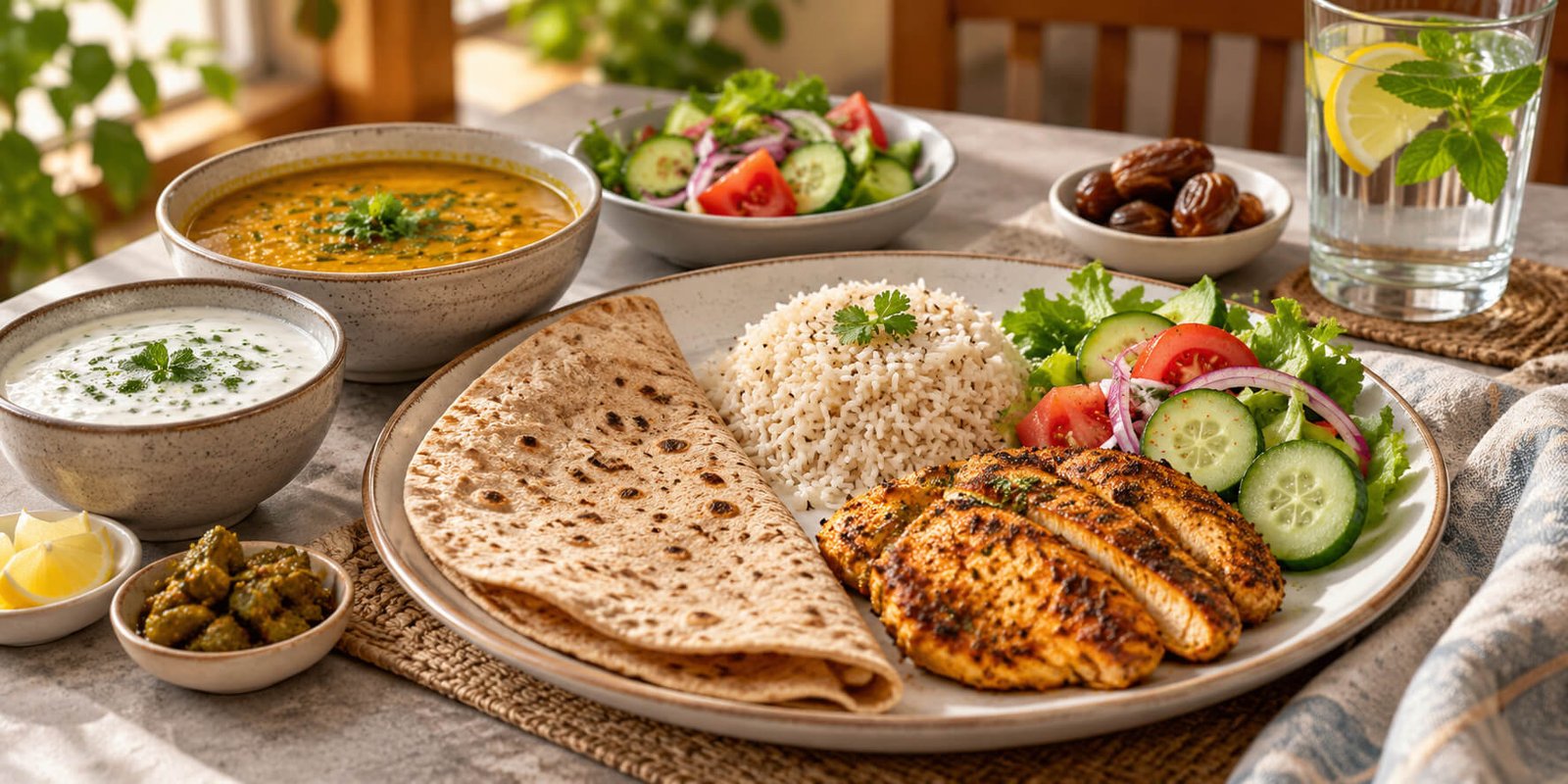
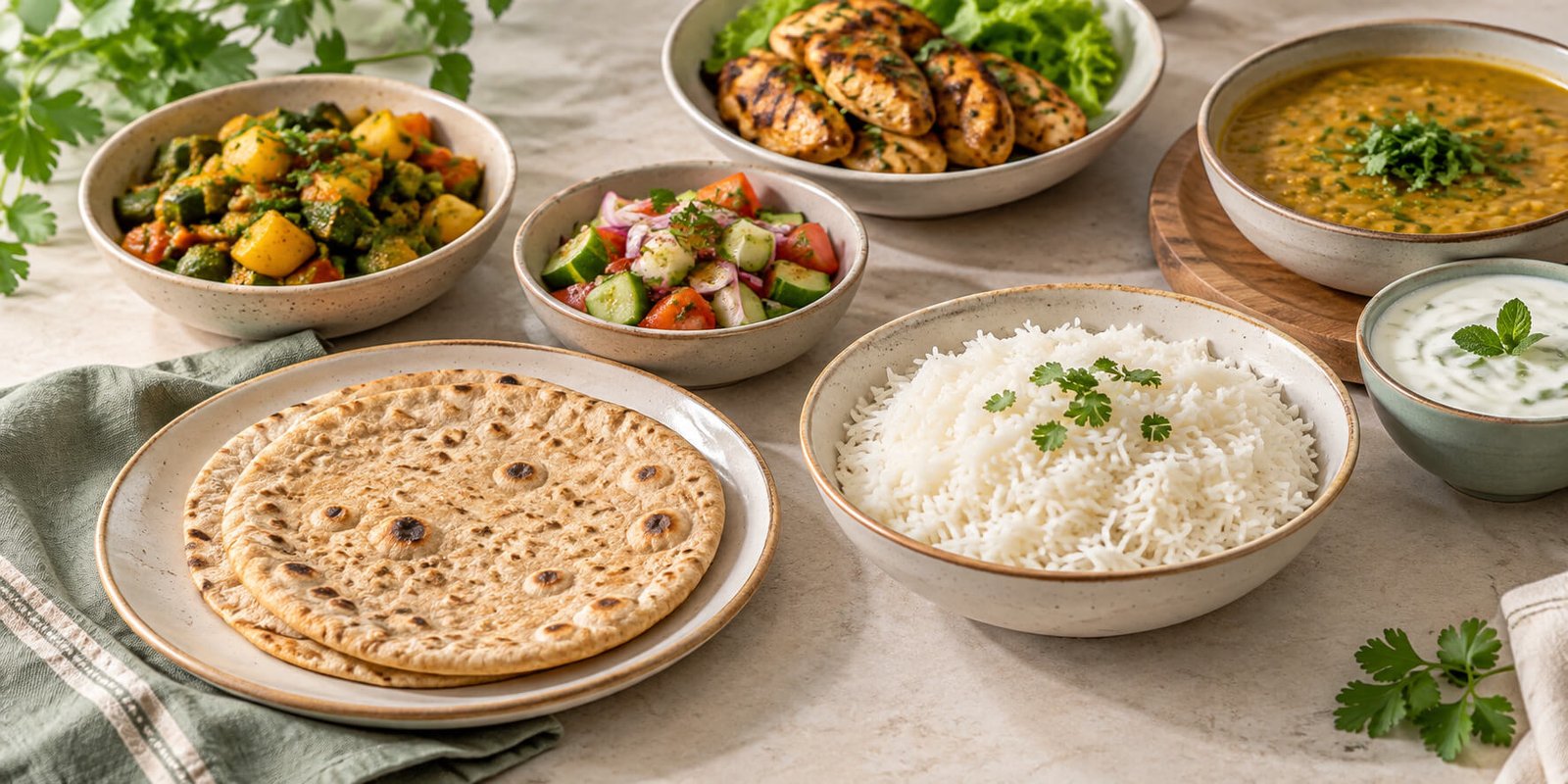
A simple approach is to fill half your plate with non-starchy vegetables, one-quarter with protein and the remaining quarter with carbohydrates. For example, you could enjoy homemade chicken salan with roti, bhindi and fresh kachumber salad.
Daal chawal can also be a balanced meal when served in appropriate portions alongside salad and plain yogurt. Remember that daal provides both protein and carbohydrates, so your ideal rice portion may vary.
Whole-Wheat Roti, White Rice or Brown Rice?
Whole-wheat roti and brown rice generally contain more fiber than white rice. Fiber supports digestive health and can help you feel satisfied after eating, making it a useful part of a balanced diet.
However, you don’t need to switch to brown rice if you prefer white basmati rice. Preparing familiar foods in sensible portions is often more practical than following dietary rules you don’t enjoy.
Also, pay attention to cooking methods. Adding ghee to roti or generous amounts of oil to pulao, biryani and salan can substantially increase a meal’s calorie content.
Can You Eat Roti or Rice at Dinner and Still Lose Weight?
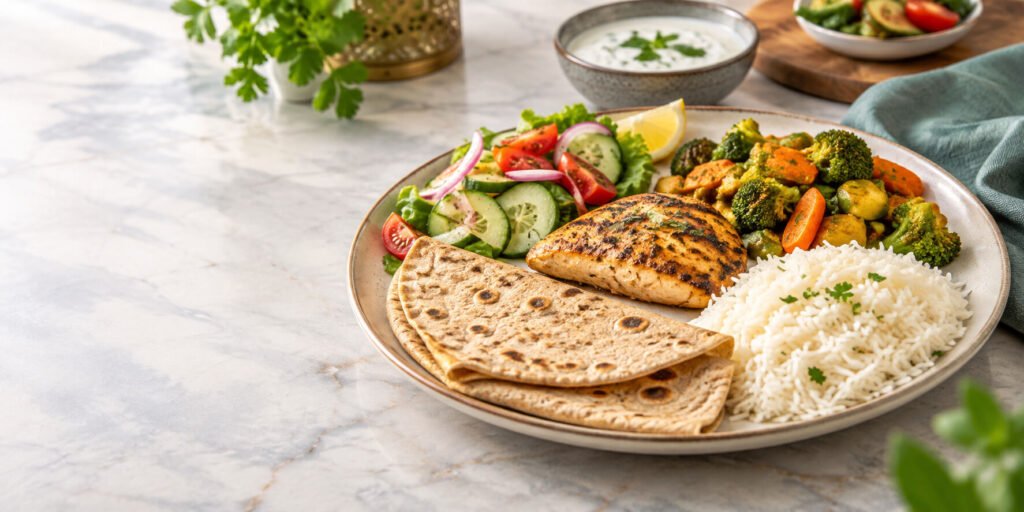
Yes. Eating rice or roti at night doesn’t automatically cause weight gain. Your overall calorie intake, portion sizes and eating habits throughout the day are more important than the time you eat carbohydrates.
If you enjoy rice at dinner, pair a measured serving with grilled chicken, fish, daal or vegetables. Similarly, roti with a balanced homemade curry can make a satisfying evening meal.
The goal isn’t to go to bed hungry. It’s to build a routine that provides adequate nutrition while supporting your weight-management goals.
What About Roti and Rice for PCOS or Diabetes?
If you’re managing PCOS, insulin resistance or diabetes, carbohydrate portions deserve particular attention. Both roti and rice affect blood glucose, although the response depends on the portion, preparation and other foods eaten alongside them.
Choosing whole grains, including protein and eating plenty of non-starchy vegetables may help you manage your meals more effectively. However, there is no single carbohydrate allowance that suits everyone.
Dr. Noor’s personalized nutrition guidance focuses on creating practical dietary routines around individual health needs, medical history and everyday Pakistani foods. Whether you’re managing your weight, PCOS or diabetes, the aim is to make healthy eating easier without unnecessarily restricting the meals you enjoy.
Five Common Mistakes When Eating Roti or Rice for Weight Loss
You don’t need a completely different menu to improve your eating habits. Often, small changes to the meals you already prepare can make a meaningful difference.
- Ignoring portion sizes: A large homemade roti or heaped plate of rice may contain considerably more calories than a standard serving.
- Overlooking cooking oil: Ghee, butter and oil contribute calories, even when the main ingredients are nutritious.
- Skipping protein: Include an appropriate source of protein, such as chicken, fish, eggs, yogurt or daal.
- Avoiding vegetables: Add sabzi or salad to improve the nutritional balance and volume of your meals.
- Eliminating favorite foods: Overly restrictive diets can be difficult to maintain, especially when you share meals with your family.
Focus on changes that work with your household, budget and schedule rather than trying to follow a completely different eating routine.
Final Thoughts: You Don’t Have to Give Up Roti or Rice
Weight loss doesn’t have to mean saying goodbye to your favorite Pakistani foods. Whole-wheat roti offers more fiber than white rice, but both can fit comfortably into a balanced eating routine.
Start with manageable portions, include protein and vegetables, and pay attention to added cooking fats. Most importantly, choose habits you can maintain while enjoying meals with your family.
If you’re unsure what portions are appropriate for your health goals, Dr. Noor’s personalized nutrition consultations can help you develop an eating plan around your lifestyle and everyday meals.
Frequently Asked Questions
Should I Eat Rice or Roti to Lose Weight?
Both can support weight loss when eaten in appropriate portions. Whole-wheat roti generally provides more fiber than white rice, but neither food needs to be excluded from a balanced diet.
How Many Rotis Should I Eat Per Day for Weight Loss?
There is no fixed number suitable for everyone. Your requirements depend on the size of your rotis, daily energy needs, physical activity and the other foods you eat.
Can I Eat Both Roti and Rice in One Day?
Absolutely. You can have roti at lunch and rice at dinner, or include measured portions of both in the same meal. Consider your overall carbohydrate intake rather than treating either food as forbidden.
Is Brown Rice Better Than White Rice for Weight Loss?
Brown rice provides more fiber, but white rice can also fit into a weight-loss diet. Choosing a portion you enjoy and can maintain consistently is more important than forcing yourself to eat a particular variety.
What Is a Good Seven-Day Pakistani Diet Plan for Weight Loss?
A balanced Pakistani meal plan can include eggs, yogurt, fruit, roti, rice, daal, vegetables and suitable protein sources. The appropriate portions depend on your nutritional needs, health conditions and activity level.