If you are trying to lose weight, biryani may feel like one of those foods you are supposed to give up. Between the rice, oil, fried onions and generous serving sizes, it is easy to assume that biryani simply does not belong in a weight-loss diet.
The good news is that you do not have to stop eating biryani to lose weight. A sensible portion can fit into a balanced eating routine when you consider how it is prepared, what you eat with it and how much you eat throughout the rest of the day.
Weight loss should not require you to disconnect from Pakistani food or family meals. Learning how to work with the foods you already enjoy is usually much more realistic than trying to follow a completely separate “diet” menu.
Is Biryani Good for Weight Loss?
Biryani is not a special weight-loss food, but it is also not automatically a food that causes weight gain. Whether you lose weight depends largely on your overall energy intake over time rather than one particular meal.
If your body uses more energy than you consistently consume, weight loss can occur. That means biryani can be included as part of your diet if the portion fits your individual energy needs and the rest of your eating pattern is reasonably balanced.
The same principle applies to rice in general. If you have been avoiding rice because you believe it automatically leads to weight gain, understanding roti and rice portions for weight loss can make everyday Pakistani meals much easier to manage.
How Many Calories Are in Biryani?
There is no single calorie number that applies to every plate of biryani. Two servings that look similar can contain very different amounts of energy depending on the recipe and portion.
A homemade chicken biryani prepared with measured oil may be quite different from a large restaurant serving cooked with generous amounts of oil, ghee and fried onions.
Calories can increase depending on:
- The amount of rice in your serving
- How much oil or ghee is used
- The type and quantity of meat
- Whether the meat has skin or visible fat
- Fried onions and potatoes
- The actual size of your plate
- Second helpings and side dishes
This is why asking “How many calories are in one plate of biryani?” rarely has one accurate answer. Your plate at home may be much smaller than a restaurant plate or wedding serving.
How Much Biryani Should You Eat for Weight Loss?
There is no universal biryani portion that everyone trying to lose weight should follow. Your needs depend on your age, activity level, body size, health conditions and what else you eat during the day.
Instead of filling a large dinner plate with rice, begin with a moderate portion. Include a good amount of chicken or another protein source and add salad or vegetables alongside it.
Try eating slowly before deciding whether you need another serving. Biryani is easy to eat quickly, particularly when you are very hungry, and second helpings can turn a reasonable meal into a much larger one without you noticing.
You also do not need to weigh every grain of rice. Becoming familiar with your usual bowls, serving spoons and plates can help you develop better portion awareness without making every meal feel like a calculation.
How to Make Biryani Better for Weight Loss
You do not need to turn biryani into an entirely different dish. A few changes to the way you prepare and serve it can make it easier to include in your routine.
Keep the Rice Portion Reasonable
Rice itself is not the problem. A very large quantity of rice, particularly when cooked with considerable added fat, can make the meal much more calorie-dense.
A smaller rice portion alongside chicken, vegetables and yogurt can still give you the flavors and satisfaction you expect from biryani.
Include Enough Protein
A plate dominated by rice may not keep you satisfied for as long as a more balanced serving.
When making chicken biryani, include a reasonable amount of chicken rather than serving mostly rice with one small piece of meat. Protein can support fullness and makes the meal more nutritionally balanced.
Measure Oil Instead of Pouring Freely
Oil and ghee provide a significant amount of energy in a relatively small quantity. This does not mean you need oil-free biryani, but measuring the amount used can make a meaningful difference.
If you cook at home, you have much more control over this than when ordering from a restaurant.
Add Kachumber or Raita
Fresh cucumber, tomato, onion and other vegetables can add volume and freshness to the meal. Plain yogurt or vegetable raita can also work well alongside biryani.
These sides help create a more complete meal rather than relying on a very large serving of biryani alone.
Do You Need Brown Rice Biryani to Lose Weight?
No. You do not have to replace white basmati rice with brown rice to make weight loss possible.
Brown rice generally provides more fiber, which can be useful, but white rice can still be part of a balanced diet. If traditional basmati biryani is the version you actually enjoy, paying attention to portion size and cooking fat may be more sustainable than forcing yourself to eat a substitute you dislike.
The goal is not to make every familiar Pakistani food look like a “diet” food. It is to learn how familiar foods fit into an eating pattern that supports your health.
Can You Eat Chicken Biryani While Losing Weight?
Yes. Chicken biryani can fit comfortably into a weight-loss diet, particularly when the meal contains a good amount of chicken and the oil and rice portions are kept reasonable.
If you are preparing it yourself, skinless chicken can reduce some of the added fat. You can also use slightly less oil, avoid excessive fried onions and serve the biryani with kachumber or raita.
You do not have to make all these changes every time. What you do consistently matters much more than making one meal nutritionally perfect.
Can You Eat Biryani Once a Week?
Yes, you can potentially eat biryani once a week and continue losing weight. There is no nutritional rule stating that biryani must be limited to a specific number of times each month.
Someone eating a moderate homemade serving once or twice a week may have a very different overall diet from someone eating oversized restaurant portions several times a week.
Frequency is only one part of the picture. Your portions, cooking methods, activity, other meals and overall calorie intake also matter.
Treating biryani as a forbidden food can sometimes make it feel even more tempting. Allowing favorite foods in sensible amounts may make your eating routine easier to maintain over the long term.
What About Biryani at Weddings or Restaurants?
Restaurant and wedding biryani can be harder to estimate because you do not know exactly how much oil, ghee or rice has been used. The serving size may also be considerably larger than what you would normally eat at home.
You can still enjoy it.
Try serving yourself a reasonable amount instead of filling the plate completely. Include chicken or meat rather than taking only rice, and add salad if it is available.
Also consider what comes with the biryani. Soft drinks, fried starters, rich curries, desserts and repeated servings can add much more to the meal than the biryani itself.
One heavier meal will not undo weeks of consistent habits. You also do not need to skip meals or starve yourself the following day to “make up” for it. Return to your normal routine.
Should You Skip Meals Before Eating Biryani?
Skipping breakfast and lunch because you plan to eat biryani at dinner often sounds logical, but arriving at the meal extremely hungry can make portion control much more difficult.
Instead, eat normally earlier in the day. Meals containing protein, vegetables, fruit and other filling foods can help you arrive at dinner comfortably hungry rather than ravenous.
You can make your other meals lighter if that naturally suits your appetite, but there is no need to punish yourself or earn your biryani.
Can You Eat Biryani With PCOS or Diabetes?
Having PCOS, insulin resistance or diabetes does not automatically mean that rice or biryani has to disappear from your diet. However, carbohydrate portions and the overall balance of the meal may require more individual attention.
Pairing rice with protein, vegetables and yogurt can create a more balanced meal, but the amount that works for one person may not work for another.
For women managing PCOS, the same principle applies to other traditional foods. Understanding how PCOS can be managed with everyday Pakistani foods can be more helpful than following long lists of forbidden foods.
If you take glucose-lowering medication or have difficulty managing your blood sugar, your carbohydrate intake should be personalized to your medical needs.
A Simple Way to Build Your Biryani Meal
Rather than asking whether biryani is “allowed,” think about how the complete meal looks.
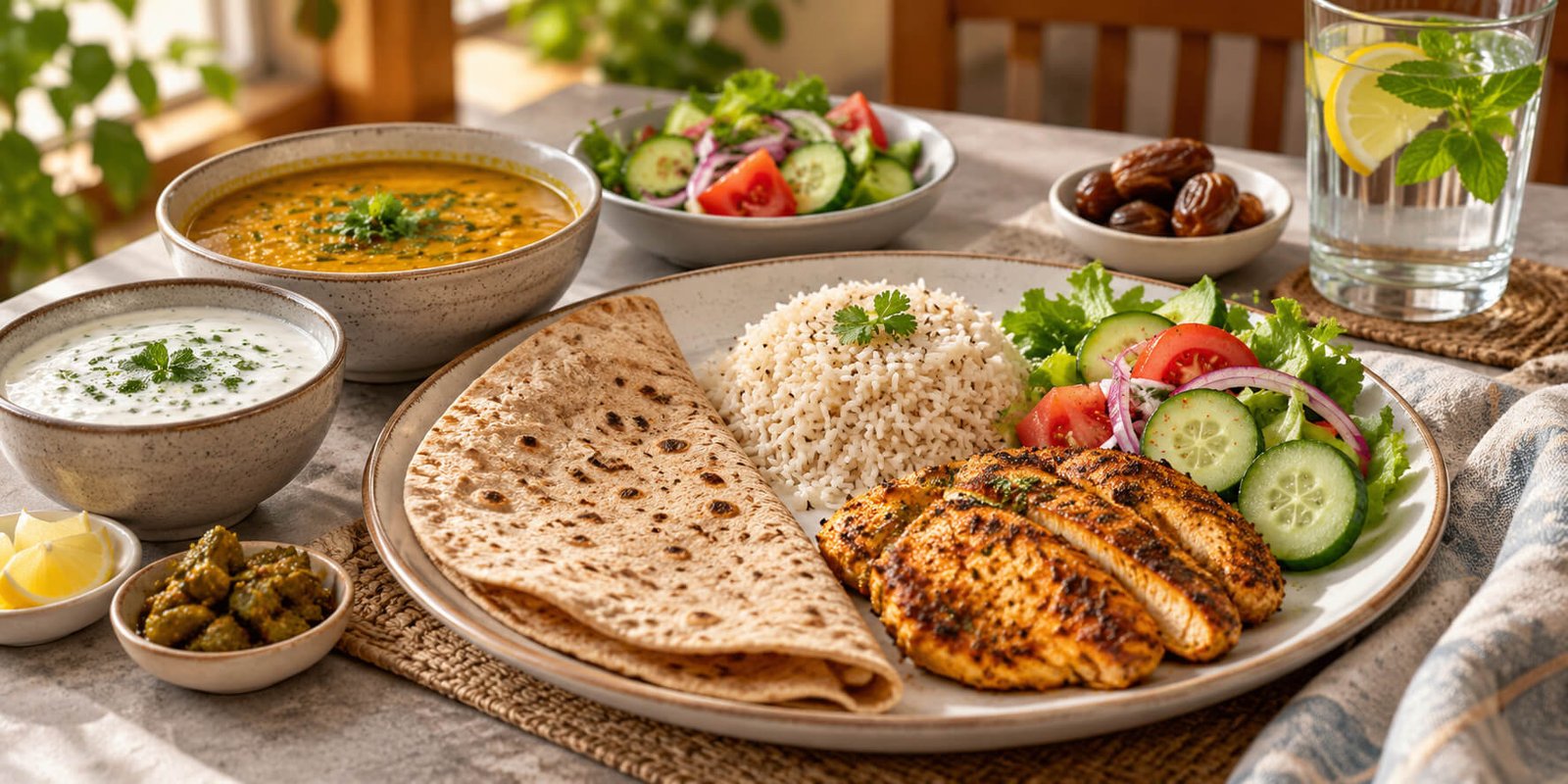
A practical biryani meal might include a moderate serving of chicken biryani, enough chicken to provide a meaningful source of protein, fresh kachumber or another vegetable side, and plain or vegetable raita.
Water or an unsweetened drink can keep the meal simple without adding calories through a soft drink or sweet beverage.
Your ideal quantities may be different from someone else’s. That is why Dr. Noor’s personalized nutrition support focuses on individual health needs, food preferences, routines and familiar Pakistani meals rather than handing everyone the same diet chart. Consultations are provided exclusively online, making individualized nutrition guidance available across Pakistan.
The Bottom Line
Yes, you can eat biryani while losing weight.
You do not need brown rice biryani, an oil-free recipe or a “cheat day” to make it work. What matters is keeping your portion appropriate, including enough protein, being aware of added cooking fats and considering the rest of your eating pattern.
Most importantly, do not measure the quality of your diet by whether you managed to avoid your favorite foods. A sustainable weight-loss plan should teach you how to eat biryani, roti, rice and other familiar foods in ways that support your health without making every meal feel restrictive.
Frequently Asked Questions
Can I Eat Biryani While on a Diet?
Yes. Biryani can be included in a weight-loss diet when eaten in an appropriate portion and balanced with your overall calorie and nutritional needs.
Is Biryani High in Calories?
Biryani can be calorie-dense because it combines rice, meat and cooking fat. The total calories vary considerably depending on the amount of oil or ghee, serving size and ingredients used.
How Much Biryani Is 500 Calories?
There is no fixed quantity because recipes vary. Homemade biryani prepared with measured oil may provide a larger portion for the same calories than an oil-rich restaurant version.
Can I Eat Biryani Once a Week While Losing Weight?
Yes. Eating biryani once a week does not automatically prevent weight loss. Your overall eating pattern and portion sizes across the week are more important.
Is Chicken Biryani Good for Weight Loss?
Chicken biryani can fit into a weight-loss diet, particularly when it contains enough chicken, a reasonable amount of rice and controlled cooking fat.
Can I Eat Biryani at Night While Losing Weight?
Yes. Eating biryani at night does not automatically cause weight gain. Your total intake and overall eating habits matter more than eating carbohydrates at a particular time.
Does Rice Cause Weight Gain?
Rice does not automatically cause weight gain. Weight gain occurs when energy intake consistently exceeds what your body uses. Rice can be included in sensible portions as part of a balanced diet.