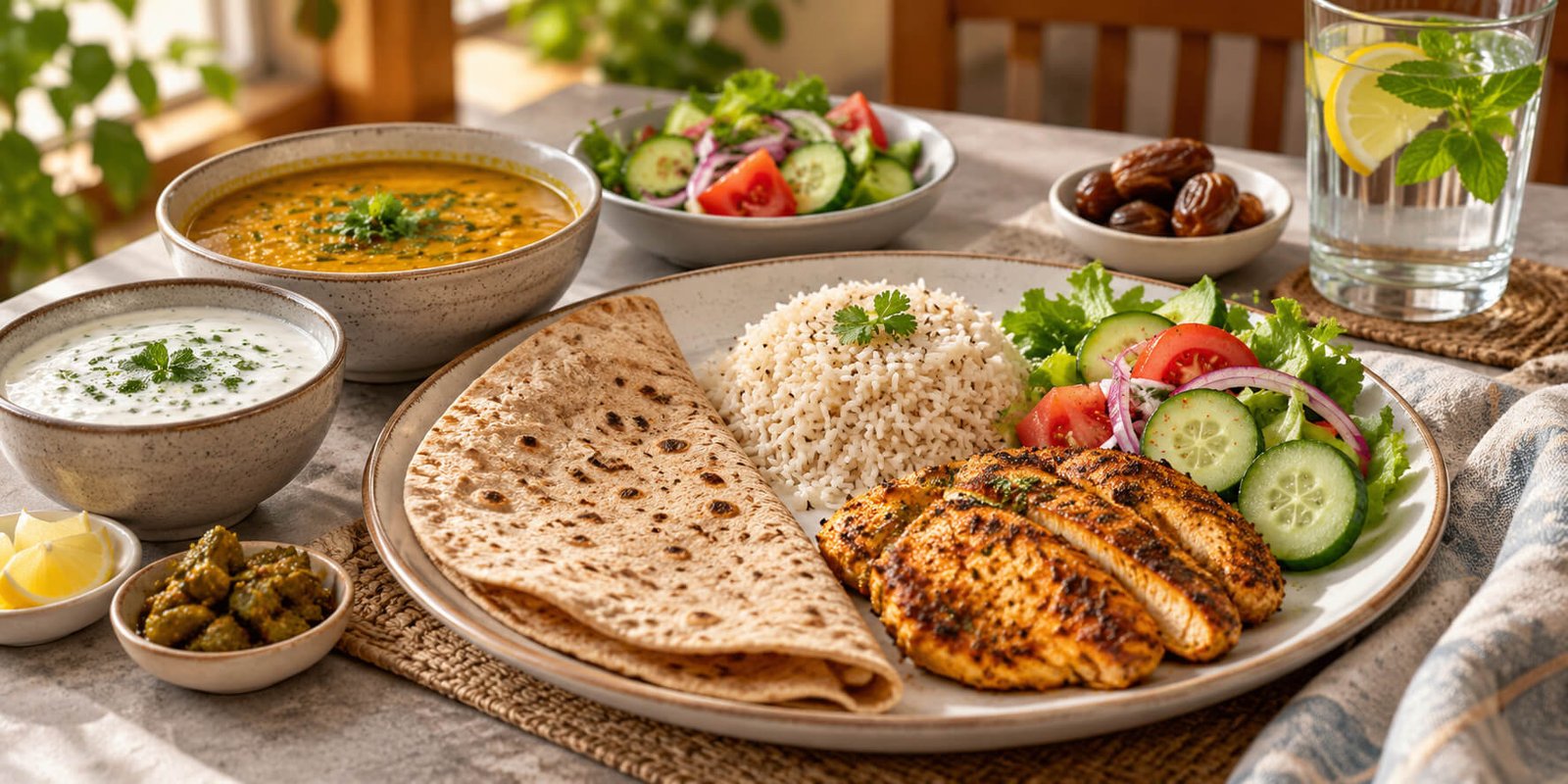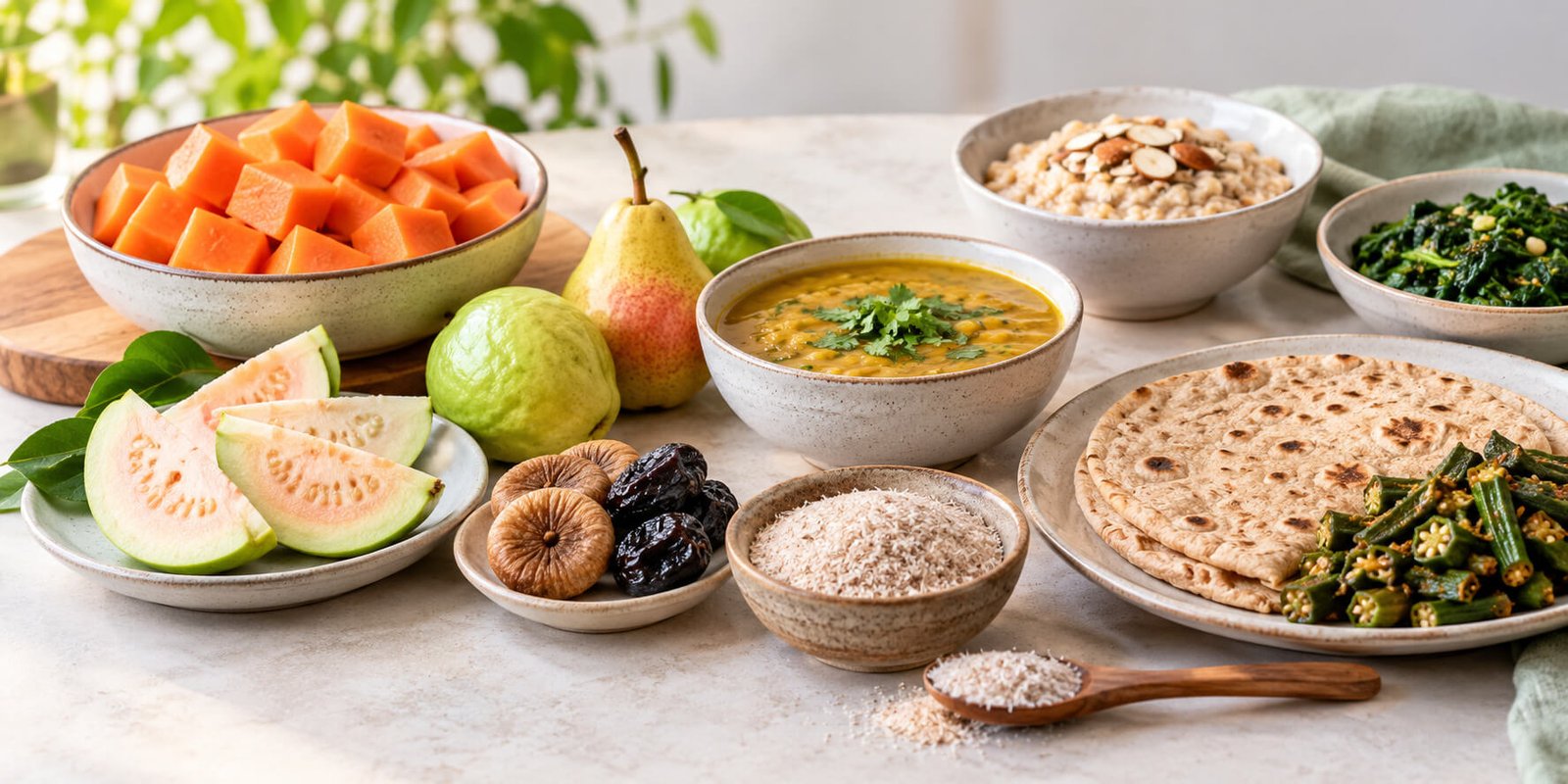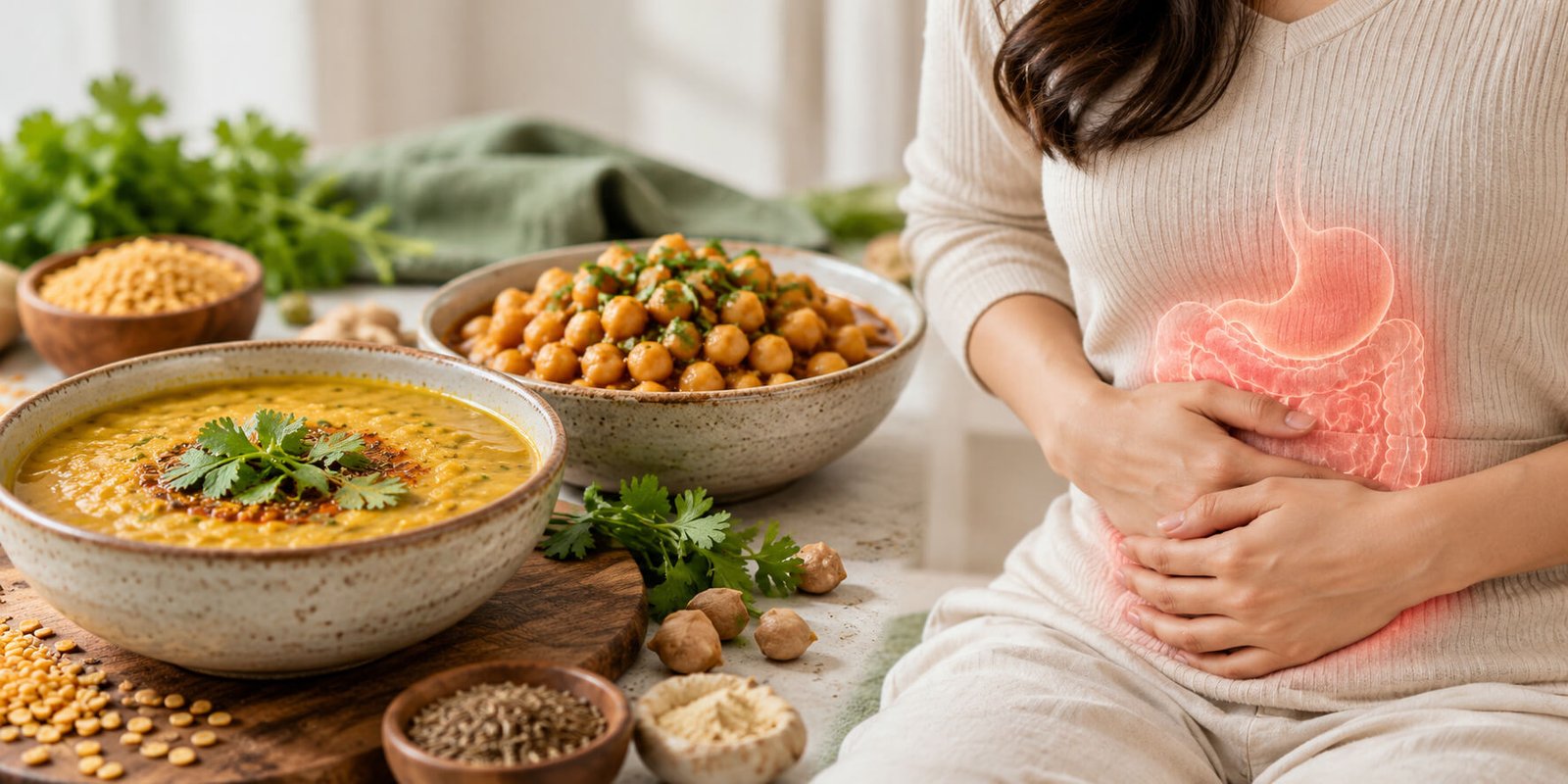
Daal and chana are staples in many Pakistani homes. They are affordable, filling and packed with plant protein, fiber and important nutrients. But for some people, a comforting bowl of daal chawal or chana can be followed by an uncomfortable feeling of fullness, gas or a visibly bloated stomach.
If lentils make you gassy, it does not automatically mean they are unhealthy or that your digestive system cannot handle them. The explanation usually involves the type of carbohydrates in pulses, the amount you eat, how they are prepared and how sensitive your digestive system is.
Understanding what is happening can help you enjoy these foods more comfortably instead of removing them from your diet unnecessarily.
Why Do Lentils Cause Gas?
Daal, chickpeas and other legumes contain carbohydrates known as oligosaccharides. Some of these carbohydrates are difficult for the enzymes in our small intestine to break down completely.
As a result, part of them reaches the large intestine undigested. The bacteria living in the gut then ferment these carbohydrates. Gas is naturally produced during this fermentation process, which may lead to flatulence, pressure or bloating.
Daal and chana are also rich in dietary fiber. Fiber is beneficial for digestion, bowel regularity and overall health, but suddenly eating a large amount can make gas more noticeable, especially if your usual diet is relatively low in fiber.
This is why two people can eat the same bowl of daal and feel completely different afterward.
Why Does Chana Cause More Bloating for Some People?
Chana, or chickpeas, can be more difficult for some people to tolerate than smaller or split lentils. Whole chickpeas contain considerable amounts of fiber and fermentable carbohydrates, and the portion served in dishes such as chana masala or chole can sometimes be quite large.
Someone who feels fine after a small serving may become bloated after eating a full bowl.
Your usual eating pattern matters too. If you rarely eat beans, chickpeas or lentils and suddenly have a large serving, your digestive system may respond with more fermentation and gas.
People with a sensitive gut, constipation or irritable bowel syndrome may notice even stronger symptoms.
Is the Daal Really Causing Your Bloating?
It is easy to blame the main ingredient on the plate, but sometimes daal is only part of the picture.
A typical Pakistani daal or chana dish may contain onions, garlic, chilli, oil or ghee alongside roti or rice. Some people tolerate the lentils themselves but become uncomfortable because of the amount of food eaten or other ingredients included in the meal.
Onion and Garlic
Onion and garlic contain fermentable carbohydrates that can cause bloating in people who are sensitive to them, particularly some people with IBS.
If you consistently feel uncomfortable after heavily seasoned daal but tolerate simpler preparations better, the accompanying ingredients may be contributing.
Large Portions
Eating two large bowls of chana is very different from eating a few spoonfuls as part of a balanced meal.
The larger the amount of fermentable carbohydrate that reaches your intestine at one time, the greater the potential for fermentation and gas.
Heavy Tadka and High-Fat Meals
Oil and ghee do not produce gas in the same way as fermentable carbohydrates, but very rich meals can make some people feel heavy, overly full or uncomfortable.
If your daal is prepared with a generous amount of oil and eaten alongside fried foods, the entire meal may be contributing to how you feel afterward.
Which Daal Causes the Most Gas?
There is no single daal that causes the most gas in everyone. Digestive tolerance varies considerably from person to person.
Whole chickpeas, rajma and other whole legumes may feel heavier for some people because of their structure, fiber content and typical serving sizes. Others can eat these foods regularly without any noticeable discomfort.
The important question is not simply, “Which daal causes gas?” but rather, “Which type and amount can my digestive system comfortably tolerate?”
Keeping track of your symptoms can often reveal useful patterns.
Which Daal Is Easier to Digest?
Some people find well-cooked split dals easier to tolerate than larger whole legumes. Yellow moong dal and split masoor dal, for example, may feel lighter for certain people when cooked until soft.
That does not mean moong dal is completely gas-free. Even an easily tolerated lentil can cause bloating if you eat a very large serving or suddenly increase your fiber intake.
Start with smaller amounts and notice how your body responds. If one variety repeatedly causes discomfort, you can experiment with another rather than eliminating every type of pulse.
You can also explore Dr. Noor’s healthy recipes for ideas that make balanced eating more practical without turning everyday meals into restrictive diet food.
Does Soaking Daal and Chana Help Reduce Gas?
Soaking can help, particularly with dried chickpeas and larger whole pulses.
During soaking, some water-soluble carbohydrates move into the soaking water. Discarding that water and cooking the legumes in fresh water may improve tolerance for some people.
For dried chana, overnight soaking is often practical. Lentils that are smaller or split generally require much less soaking, and some do not necessarily need an overnight soak.
The most important point is to cook pulses thoroughly. Undercooked chana is firmer and can be harder to eat and tolerate.
If using canned chickpeas, draining and rinsing them before eating may also make them easier for some people to tolerate.
How to Make Daal and Chana Easier to Digest
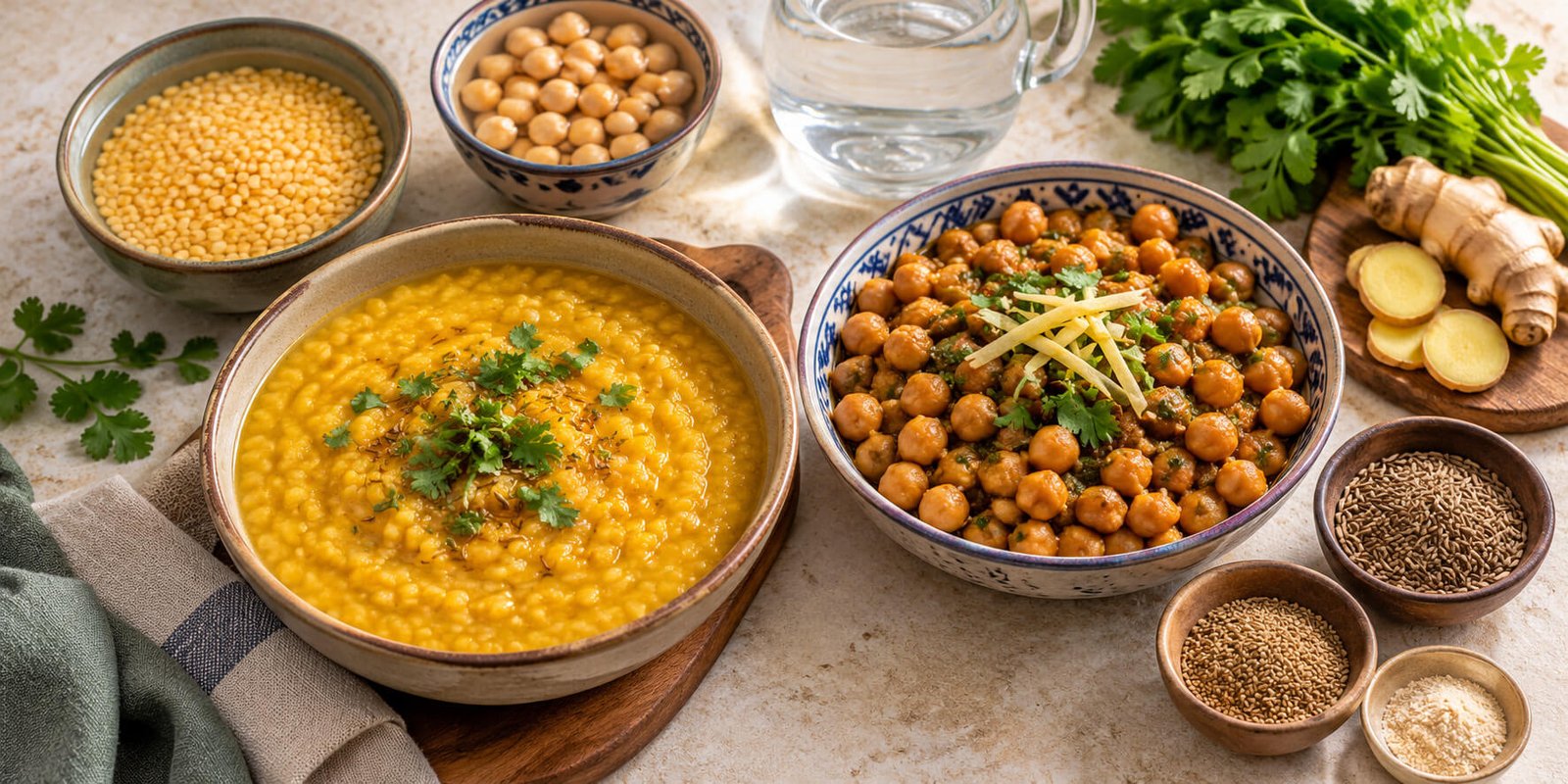
You do not necessarily need a complicated digestive routine. Small changes to preparation and portion size can make a noticeable difference.
Try these approaches:
- Start with a smaller portion and increase gradually if comfortable.
- Soak dried chickpeas and other whole legumes before cooking.
- Discard the soaking water and cook with fresh water.
- Cook chana and daal until completely soft.
- Rinse canned chickpeas before using them.
- Avoid suddenly increasing your fiber intake from very little to very high.
- Drink enough water during the day, particularly when increasing fiber.
- Notice whether onion, garlic or very oily preparations affect your symptoms.
- Eat slowly instead of rushing through a large meal.
Traditional ingredients such as ginger, jeera, ajwain and hing are commonly used in South Asian cooking around legumes. They can certainly be included for flavor and personal preference, but they should not be treated as guaranteed treatments for bloating.
Does Your Body Get Used to Eating Daal?
Sometimes.
People who do not regularly eat high-fiber foods may initially experience more gas when they begin eating lentils, beans and vegetables more often. A gradual increase usually gives the digestive system more opportunity to adapt than suddenly eating very large portions.
This does not mean you need to tolerate severe discomfort in the hope that it will eventually disappear. Mild temporary gas is very different from repeated painful bloating.
If symptoms remain significant even with smaller portions and careful preparation, it is worth looking beyond simple fiber adaptation.
Daal, Chana and IBS
People with irritable bowel syndrome can be particularly sensitive to certain fermentable carbohydrates found in pulses.
These carbohydrates are often discussed as part of FODMAPs. In sensitive individuals, they may contribute to gas, abdominal distension, pain and changes in bowel habits.
Portion size becomes especially important here. A food does not necessarily need to be completely eliminated just because a larger portion triggers symptoms.
At the same time, starting a highly restrictive diet on your own is usually not the best approach. Cutting out legumes, wheat, dairy, fruits and several vegetables without a clear reason can make your diet unnecessarily limited.
A personalized assessment can help identify which foods and portions genuinely trigger symptoms. Dr. Noor’s personalized nutrition services are designed around an individual’s eating habits, medical concerns, lifestyle and everyday Pakistani meals rather than relying on a generic list of foods to avoid.
Should You Stop Eating Daal If It Gives You Gas?
For most people with occasional mild gas, complete avoidance is not the first step.
Daal and chana provide valuable nutrients, including plant protein, fiber, folate and minerals. They are also inexpensive and practical foods that fit naturally into Pakistani eating patterns.
Instead of immediately removing them, try changing one thing at a time.
Reduce your serving size. Try a different type of daal. Cook it more thoroughly. Simplify the tadka. Observe how you feel.
This helps you understand your actual tolerance rather than assuming every pulse is a problem.
What Can You Do if You Are Already Bloated?
If you feel mildly bloated after eating daal or chana, give your digestive system some time.
A gentle walk can feel more comfortable than lying down immediately after a large meal. Continue drinking fluids normally and avoid following the meal with another very heavy serving simply because you think you need a special “cure.”
More importantly, think about what happened before the symptoms started. Was the serving unusually large? Did you eat quickly? Was the meal very oily? Had you been constipated for several days?
The pattern is usually more useful than a single episode.
When Should Bloating Be Taken More Seriously?
Occasional gas after legumes is common. Persistent or severe digestive symptoms deserve more attention.
Consider discussing your symptoms with a healthcare professional if bloating is accompanied by:
- significant or worsening abdominal pain
- ongoing diarrhea or constipation
- unexplained weight loss
- a major change in bowel habits
- frequent symptoms after many different foods
- persistent symptoms that interfere with work, sleep or everyday life
It is important not to assume that every digestive problem is simply because you ate daal.
A More Personal Approach to Digestive Health
Dr. Noor provides online nutrition consultations for people across Pakistan who want practical, evidence-based guidance that fits their normal food and lifestyle. Digestive concerns are approached by looking at the complete picture, including meal patterns, portion sizes, fiber intake, symptoms, medical history and the foods you actually eat at home.
The goal is not to hand you a long list of foods you can never eat again. It is to understand what your body tolerates and create an eating pattern that supports both your health and everyday life.
Frequently Asked Questions
Does Daal Cause Gas?
Daal can cause gas because lentils contain fiber and fermentable carbohydrates that are partially broken down by bacteria in the large intestine. How much gas you experience depends on the type of lentil, portion size, preparation and your individual digestive tolerance.
Why Does Chana Cause Gas?
Chana contains fiber and carbohydrates that can be fermented by gut bacteria. Larger portions can lead to more fermentation, which may cause gas or bloating in sensitive people.
How Can I Avoid Gas After Eating Chana?
Try soaking dried chana, discarding the soaking water, cooking it thoroughly and beginning with a smaller serving. Gradually increasing your intake may also improve tolerance.
Does Soaking Daal Reduce Gas?
Soaking can reduce some water-soluble fermentable compounds, particularly in larger pulses. It may improve tolerance, but it cannot guarantee that daal will cause no gas at all.
Which Daal Is Easiest to Digest?
Well-cooked split dals such as yellow moong or masoor may be easier for some people to tolerate than larger whole legumes. Individual tolerance still varies.
Does Moong Dal Cause Gas?
Yes, moong dal can still cause gas in some people. However, some people find split and well-cooked moong easier to tolerate than whole chickpeas or beans.
Should I Stop Eating Daal if I Have IBS?
Not necessarily. The amount and type of pulse can make a difference. If legumes regularly trigger IBS symptoms, individualized nutrition guidance can help determine appropriate portions and whether specific foods actually need to be limited.