Managing PCOS while working full-time can make healthy eating feel harder than it needs to be. Early mornings, long commutes, back-to-back meetings, office chai, canteen lunches and reaching home tired can easily push regular meals to the bottom of your priority list.
A practical PCOS diet plan for working women in Pakistan does not have to depend on expensive health foods or meals that take hours to prepare. Everyday foods such as eggs, roti, daal, chicken, dahi, sabzi, fruit and rice can all fit into a balanced routine.
The goal is not to create a perfect diet. It is to build meals you can realistically continue while supporting your nutrition, energy levels and metabolic health.
What Should a PCOS Diet Plan Actually Focus On?
There is no single PCOS diet that works for every woman. Your nutritional needs can vary depending on your symptoms, activity level, weight goals, insulin resistance, medications and other health concerns.
For most women, a practical starting point is to build meals around protein, vegetables, fiber-rich foods and appropriate portions of carbohydrates. Reducing frequent sources of added sugar and highly refined foods can also improve the overall quality of your diet.
You do not need to eliminate every carbohydrate or start eating completely differently from your family.
If insulin resistance is also part of your health picture, understanding how to balance common Pakistani meals can be especially helpful. Dr. Noor’s guide to a Pakistani diet plan for insulin resistance explains how foods such as roti, rice and daal can still be included.
A Practical PCOS Diet Plan for a Pakistani Workday
A working woman’s meal plan needs to be convenient enough to survive busy mornings, unexpected meetings and late evenings.
Instead of following rigid meal timings, use the following routine as a flexible example and adjust it according to your hunger, work schedule and individual nutritional needs.
Breakfast Before Work
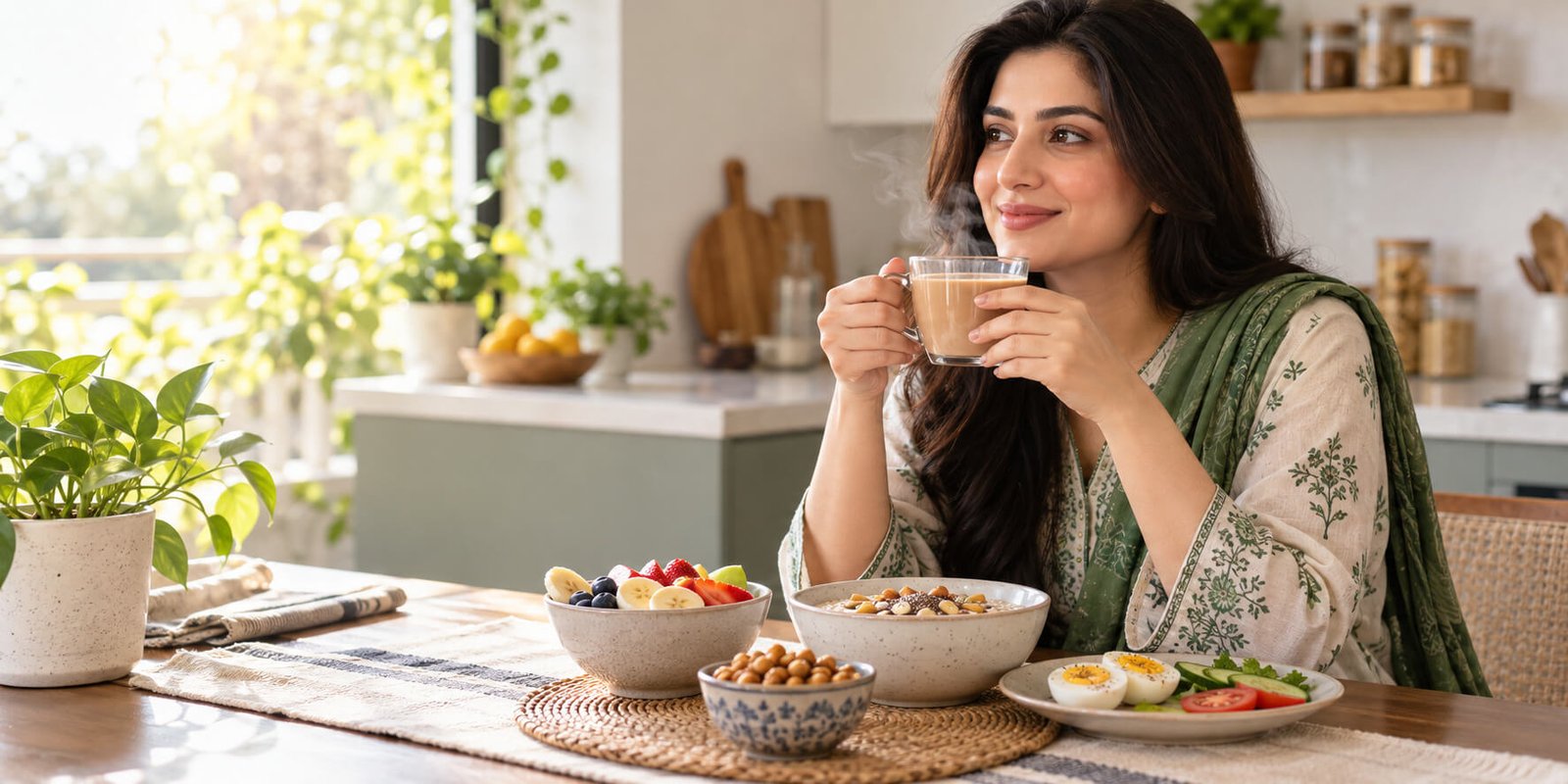
Breakfast does not need to be complicated. Try to include some protein and fiber instead of relying only on chai, biscuits or a bakery item.
Practical breakfast options include:
- Two eggs with a small whole-wheat roti and cucumber
- Besan chilla with vegetables and plain dahi
- Oats with milk or yogurt, fruit and a few nuts
- Vegetable omelette with whole-grain toast
- Boiled eggs, fruit and a small handful of almonds on rushed mornings
If chai is part of your morning routine, you do not automatically need to give it up. Pay more attention to how much sugar is going into it and what you eat alongside it.
Mid-Morning Snack at Work
A snack is useful if there is a long gap between breakfast and lunch or if you notice yourself becoming very hungry before lunchtime.
Good desk-friendly options include an apple or guava with a few nuts, roasted chana, plain yogurt or a boiled egg.
However, you do not have to eat every two or three hours simply because a diet chart tells you to. If breakfast keeps you comfortably satisfied until lunch, an extra snack may not be necessary.
A Balanced Pakistani Office Lunch
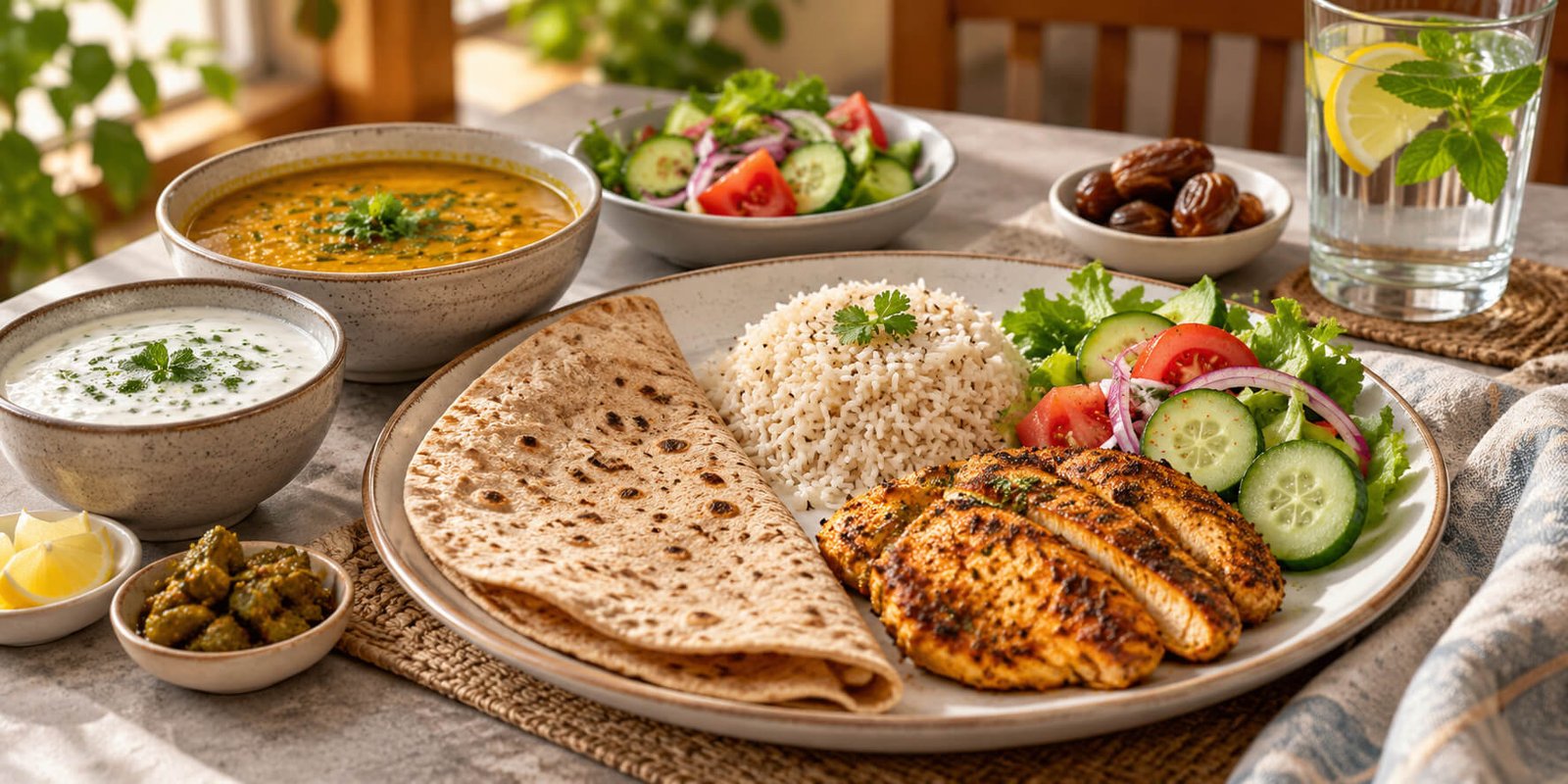
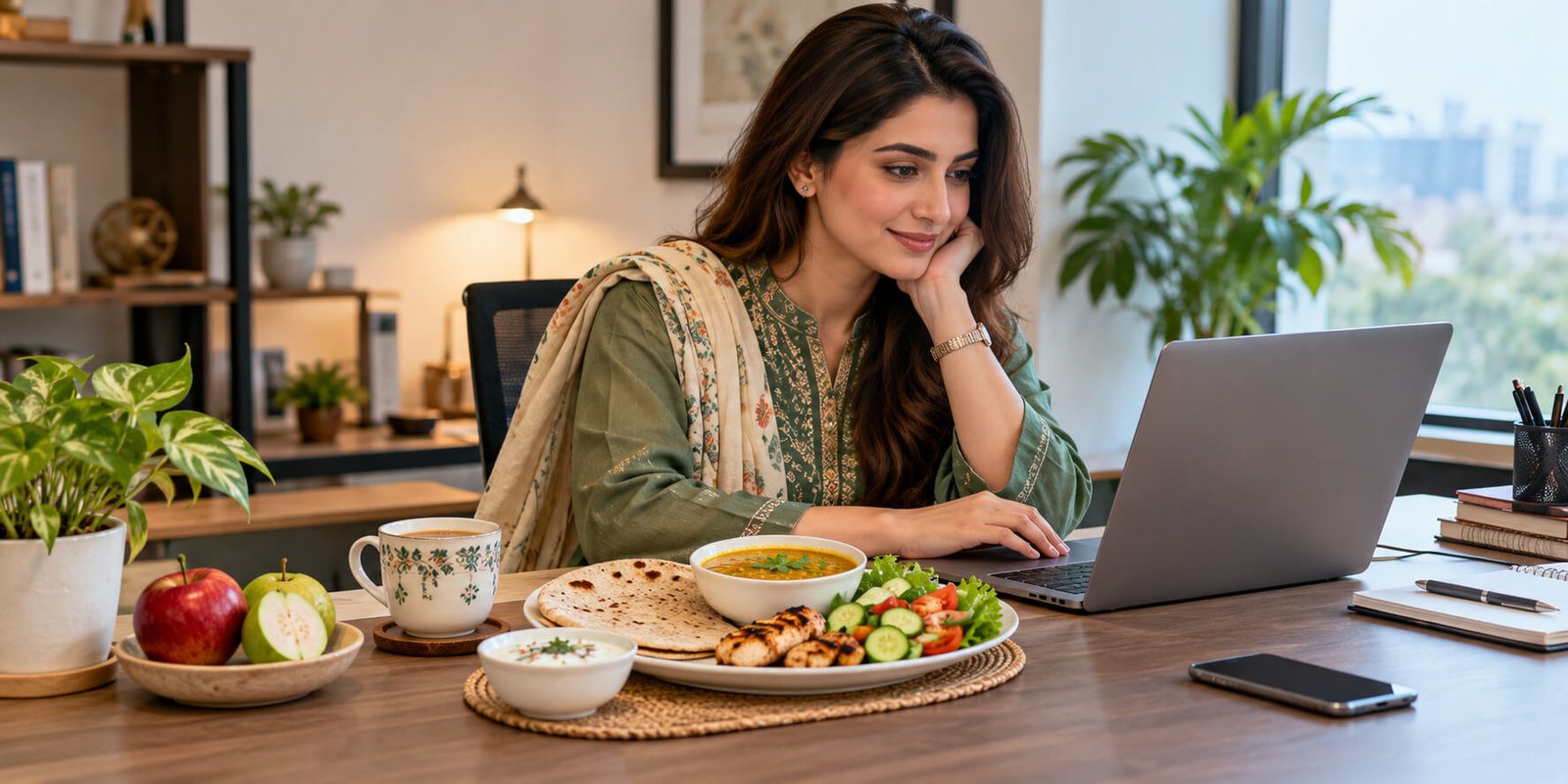
Your office lunch does not need to look like a “diet meal.” A normal Pakistani lunch can work well when the portions are balanced.
A simple way to build your plate is to include plenty of vegetables or salad, a source of protein and a sensible portion of roti or rice.
Examples include:
- One roti with chicken salan, sabzi and salad
- One roti with daal, bhindi and plain dahi
- A moderate serving of rice with chicken and kachumber salad
- Chana salad with yogurt and a small roti
- Leftover homemade chicken or sabzi packed from dinner
Preparing lunch at home also makes it easier to control how much oil, sauce and fried food ends up in your meal.
What If You Have to Eat From the Office Canteen?
Not every working woman can carry homemade lunch every day. If you have to eat from the office canteen, focus on choosing the most balanced option available instead of searching for a perfect meal.
Daal with roti, chicken salan with roti, sabzi with daal, grilled chicken or tikka with salad can all be practical choices.
Try to make fried rolls, large biryani portions, creamy curries, samosas, pakoras and sugary soft drinks occasional choices rather than your default work lunch.
One less-than-perfect meal does not ruin your PCOS diet. Your usual eating pattern matters far more than one lunch.
Managing the 4 PM Chai and Biscuit Routine
For many Pakistani working women, the biggest challenge is not lunch. It is the late-afternoon chai break when energy drops and biscuits, cake, chips or fried snacks are readily available.
You can still enjoy chai. If you are genuinely hungry, pair it with something more filling such as roasted chana, fruit with a few nuts, plain yogurt or a boiled egg.
If you usually drink several cups of sweetened tea during the day, gradually reducing the added sugar may be easier than trying to stop drinking tea completely.
What Should You Eat for Dinner After Work?
After a tiring day, dinner needs to be simple. You do not need a separate PCOS meal while the rest of the family eats normal food.
Chicken with sabzi and roti, daal with vegetables, fish with rice and salad, or leftover homemade curry with an adjusted portion can all work.
The aim is to avoid reaching dinner extremely hungry and then eating far more than you intended. Having a reasonable afternoon snack can be helpful on days when dinner will be late.
Can You Eat Roti If You Have PCOS?
Yes. Having PCOS does not automatically mean you need to stop eating roti.
Whole-wheat roti can provide carbohydrates and fiber, and it can fit into a balanced meal when combined with protein, vegetables and salad. What matters is the size and number of rotis, what you eat with them and your overall nutritional requirements.
For example, one appropriately sized roti with chicken, bhindi and salad creates a very different meal from several large rotis eaten mostly with oily gravy.
If you often wonder whether rice or roti is a better option, this Pakistani roti vs rice guide explains portions and how both foods can fit into balanced meals.
Can Women With PCOS Eat Rice?
Rice does not automatically need to be removed either. White basmati rice, brown rice or other varieties can be included in suitable portions.
Try combining rice with chicken, fish, daal, vegetables, salad or plain yogurt instead of making rice almost the entire meal.
Even foods such as biryani do not need to disappear permanently. If biryani is part of a family meal or social occasion, portion size and what accompanies it matter. Dr. Noor also explains how to include biryani while managing weight without treating it as a forbidden food.
Foods to Include More Often With PCOS
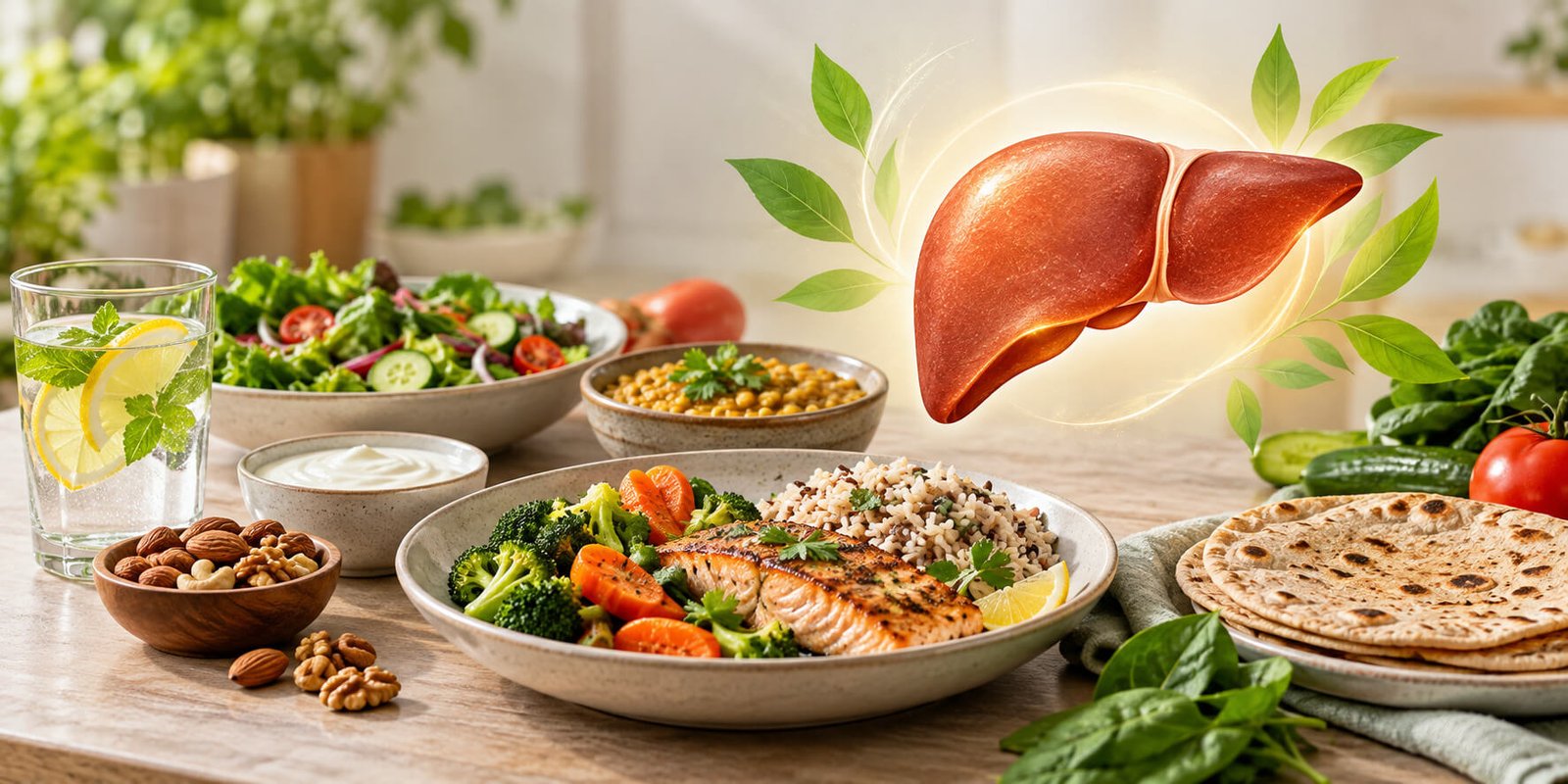
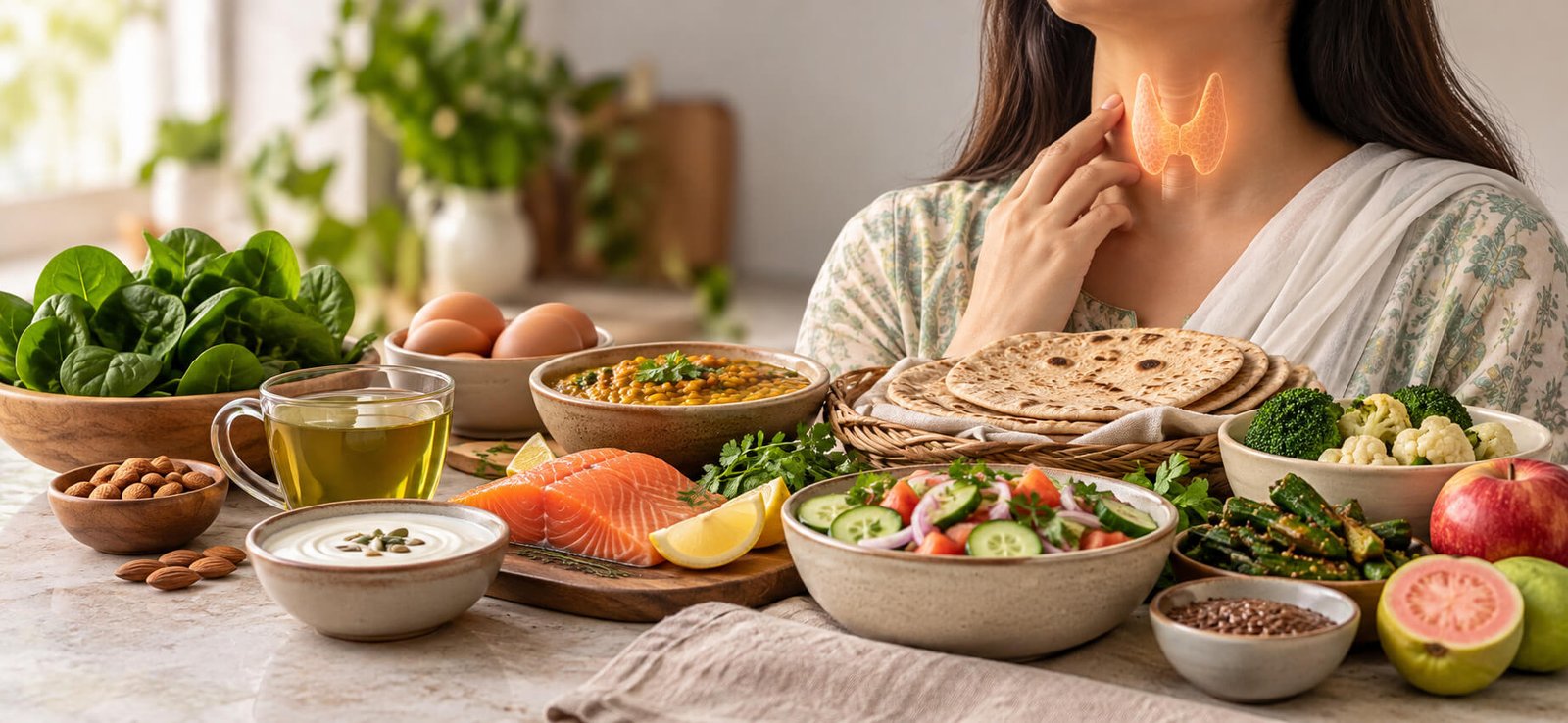
You do not need imported berries, expensive protein powders or special “PCOS foods.” A Pakistani kitchen already contains many useful options.
Try to build your regular meals around:
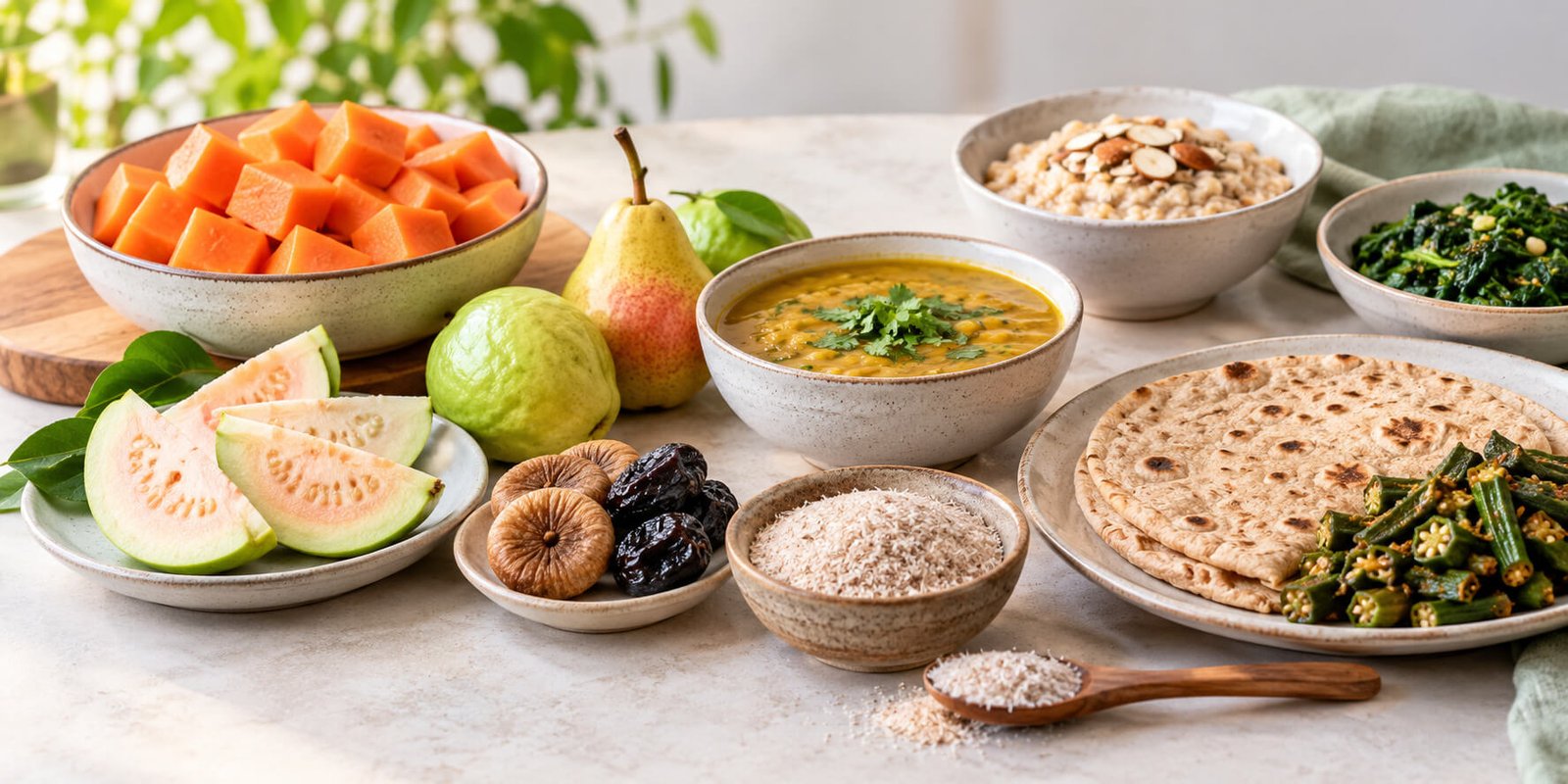
- Eggs, chicken, fish, daal, chana, lobia and plain dahi
- Palak, bhindi, lauki, tori, gobi and other seasonal vegetables
- Whole-wheat roti, oats and other fiber-containing grains
- Apples, guava, oranges, pears and seasonal whole fruits
- Almonds, walnuts and seeds in moderate portions
Try to limit how often sugary drinks, packaged juices, sweetened chai, biscuits, bakery products, fried snacks and heavily processed foods become everyday choices.
This does not mean these foods can never be eaten. Frequency and portion size matter.
Meal Prep for PCOS When You Work Full-Time
Meal preparation does not have to mean cooking seven separate boxes on Sunday night. Preparing a few useful ingredients can make weekdays much easier.
You might boil several eggs, wash salad vegetables, cook one daal, prepare chicken for two meals and portion roasted chana or nuts for work.
Dinner can also become the next day’s lunch. If you cook chicken, daal or sabzi at night, prepare an extra serving and pack it before going to bed.
Keeping one emergency snack in your office drawer can also save you on unusually busy days. Roasted chana or a small portion of nuts requires no preparation and can help when lunch is delayed.
What About Weight Loss With PCOS?
Some women with PCOS want to lose weight, but weight loss is not necessary for every woman with the condition.
If weight reduction is appropriate for you, the goal should not be to survive on extremely small portions, stop eating carbohydrates or chase rapid monthly targets. A sustainable calorie deficit, balanced meals, regular activity and habits you can continue usually make more sense.
Even without weight loss, improving meal quality, physical activity, sleep and other lifestyle habits can still support overall health.
What Is the 30/30/30 Rule for PCOS?
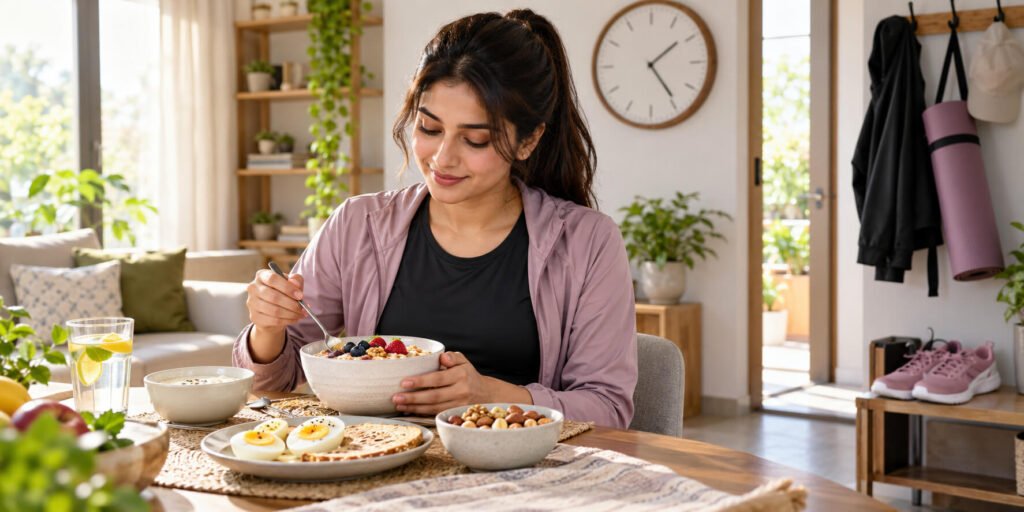
The 30/30/30 rule has become popular on social media. It usually refers to eating around 30 grams of protein within 30 minutes of waking and completing 30 minutes of low-intensity exercise.
It is not a specific medical rule for PCOS, and women do not need to follow it to manage the condition successfully.
Including protein at breakfast and staying physically active can certainly be useful habits. The exact protein amount, timing and exercise routine should fit your individual requirements rather than a viral formula.
A Sample One-Day PCOS Work Routine
A realistic day could look like this:
Breakfast: Vegetable omelette, whole-wheat roti and chai with little or no added sugar.
Mid-morning: Apple with a few almonds.
Lunch: Chicken or daal, one roti, seasonal sabzi, salad and plain dahi.
Afternoon: Roasted chana with chai.
Dinner: Fish, chicken or daal with vegetables and an appropriate portion of roti or rice.
This is only an example. Your portions may need to be different depending on your body size, activity, medications, health conditions and personal goals.
Personalized PCOS Nutrition With Dr. Noor
A general PCOS diet plan can give you ideas, but it cannot account for your exact working hours, symptoms, medications, laboratory results, food preferences and family routine.
Dr. Noor provides personalized nutrition consultations exclusively online for women across Pakistan. Your plan is built around your health needs and the Pakistani foods you already eat, with practical adjustments that can fit into workdays rather than requiring an unrealistic diet routine.
The aim is to make healthy eating manageable enough to continue, not to hand you another restrictive food list.
Frequently Asked Questions
What Is the Best Diet Plan for Women With PCOS?
There is no single best PCOS diet for every woman. A balanced pattern containing adequate protein, vegetables, fiber-rich foods, healthy fats and appropriate carbohydrate portions is a practical starting point. Your plan should also reflect your symptoms, health history and lifestyle.
Can I Eat Roti Every Day With PCOS?
Roti can be part of a PCOS diet. Whole-wheat roti paired with protein, sabzi and salad can create a balanced meal. The right portion varies between individuals, so there is no universal number of rotis suitable for everyone.
What Is a Good Pakistani Breakfast for PCOS?
Eggs with whole-wheat roti, besan chilla with yogurt, oats with nuts and fruit, or a vegetable omelette are practical options. Try to include protein instead of having only sweetened chai and biscuits.
What Should I Pack for Lunch at Work With PCOS?
Keep lunch simple. Daal with roti and sabzi, chicken with salad and roti, chana with yogurt, or leftover homemade food from dinner are easy options that do not require a separate “diet meal.”
How Can I Lose 5 kg in One Month With PCOS?
There is no single PCOS diet that can safely guarantee a 5 kg loss in one month. Weight change depends on your starting weight, energy intake, physical activity, medications and health status. A personalized and sustainable target is more useful than forcing your body to meet a fixed monthly number.
Do I Need to Stop Sugar Completely With PCOS?
You do not need to treat every sweet food as forbidden. However, reducing frequent sources of added sugar such as soft drinks, packaged juices, heavily sweetened chai, biscuits and desserts can improve the overall quality of your diet.