If you are trying to lose weight, you may have heard that rice should disappear from your dinner plate. Some people stop eating rice after 6 or 7 PM because they believe carbohydrates eaten at night are automatically stored as body fat.
You do not usually need to avoid rice at night to lose weight. A sensible portion of rice can fit into a balanced dinner. Your overall food intake, portion sizes, activity level, cooking methods, and the rest of your meal matter far more than simply eating rice after a certain hour.
Can You Eat Rice at Night for Weight Loss?
Yes, you can eat rice at night and still lose weight.
Weight loss happens when your body consistently uses more energy than you consume over time. Eating rice with dinner does not suddenly stop this process. Rice provides carbohydrates and energy, just as roti, potatoes, oats, fruit, and other carbohydrate-containing foods do.
The more useful question is not whether rice is allowed at night. It is whether the amount of rice and the rest of your dinner fit your nutritional needs.
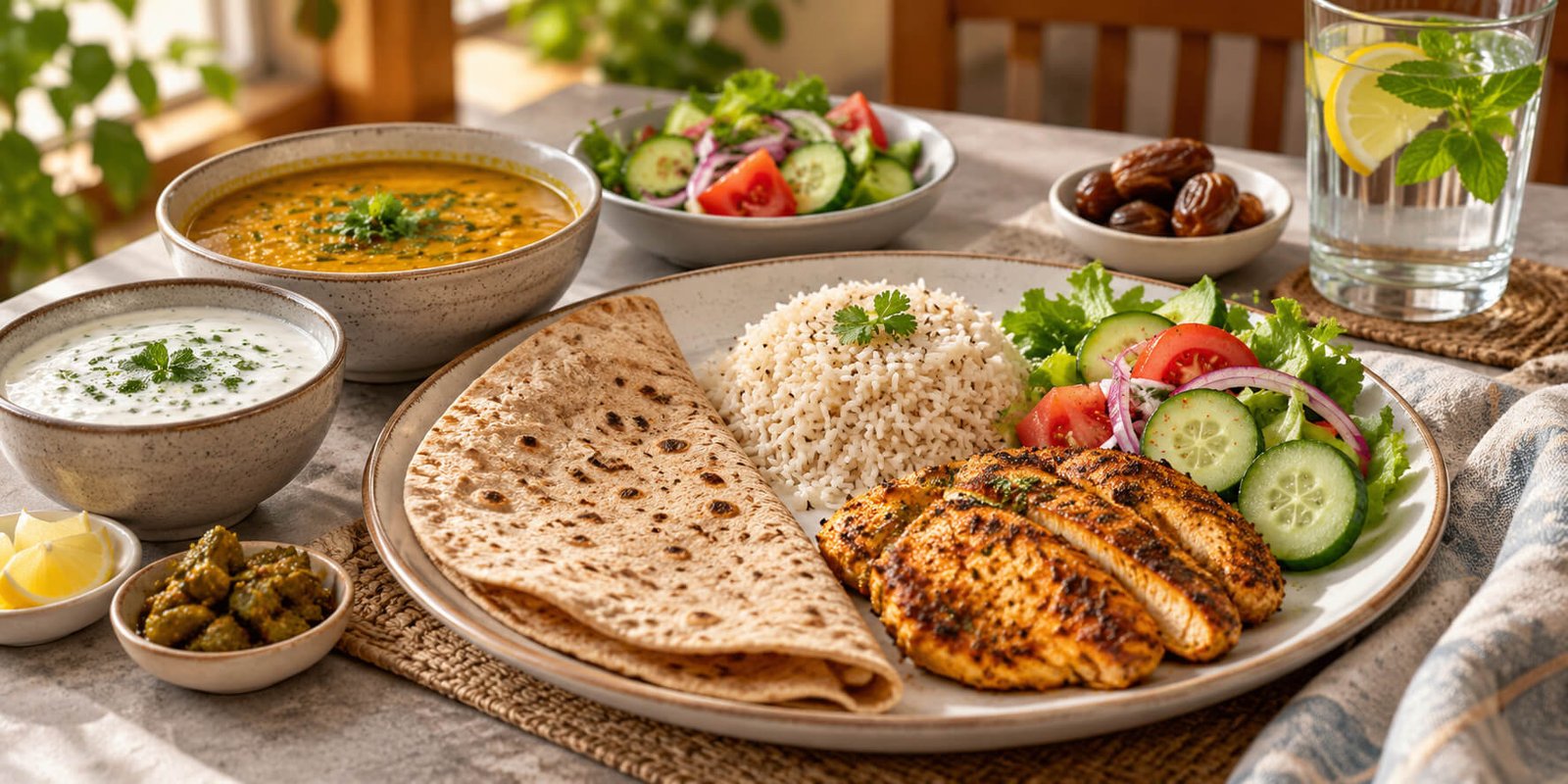
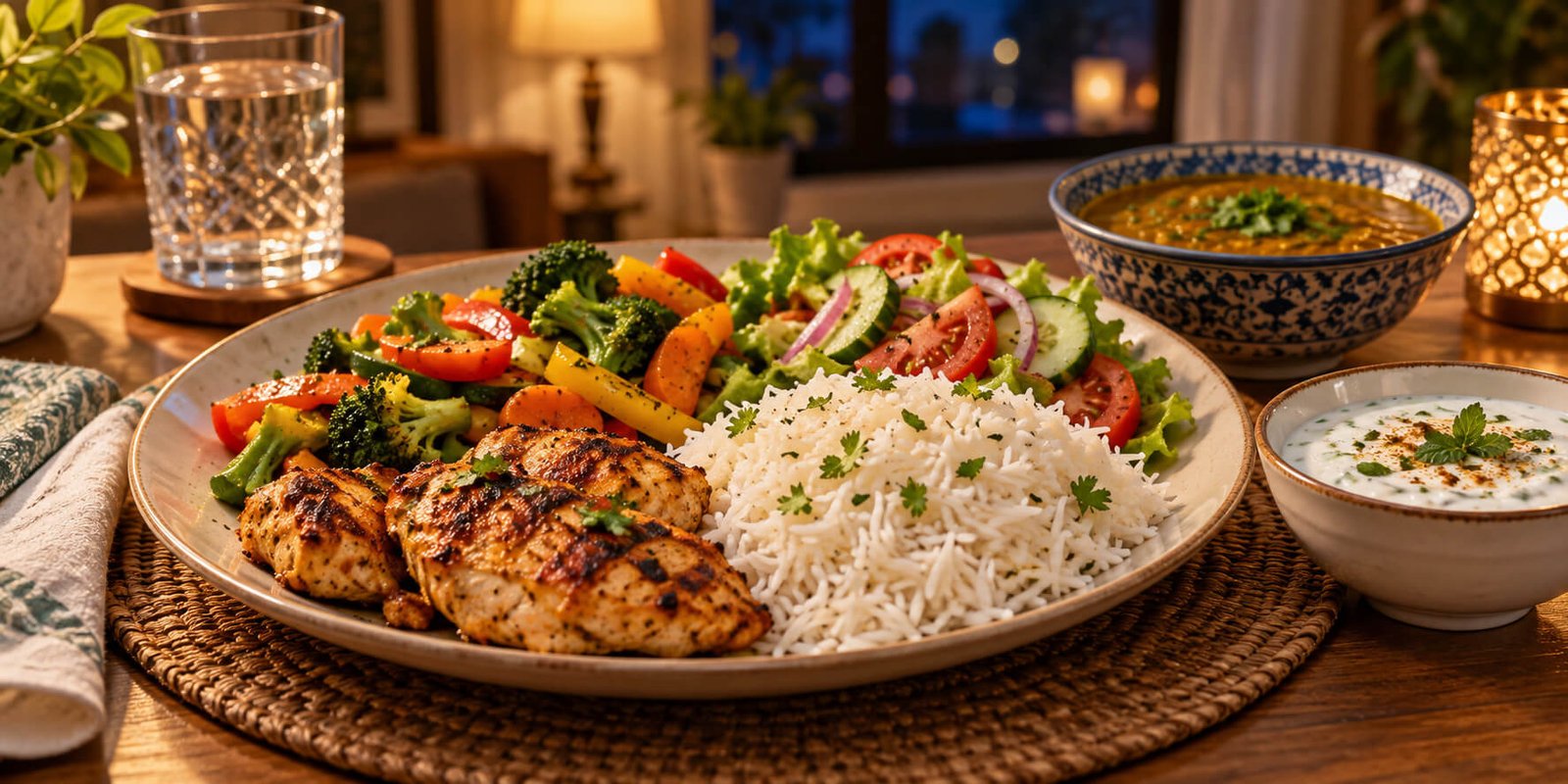
A moderate serving of rice with chicken, fish, daal, vegetables, salad, or yogurt can be part of a perfectly reasonable weight loss dinner.
Does Eating Rice at Night Cause Weight Gain?
Rice does not automatically turn into body fat simply because you eat it in the evening. Your body does not have a rule that carbohydrates eaten after sunset must be stored as fat.
Problems can arise when dinner is consistently much larger than your body needs. A large plate of rice, oily salan, fried sides, sugary drinks, dessert, and later snacks can make it very easy to consume more calories than you realize.
In this situation, rice often receives all the blame even though the entire meal matters.
What About Eating Very Late?
Meal timing is not completely irrelevant. Regularly eating very large meals shortly before sleeping may not be ideal for appetite control, digestion, sleep, or your overall eating routine.
However, having a balanced dinner at 8 or 9 PM because that fits your work or family schedule is very different from eating a heavy meal late at night followed by chips, biscuits, sweets, or another meal before bed.
You do not need to become afraid of the clock.
How Much Rice Should You Eat at Night for Weight Loss?
There is no single rice portion that is appropriate for everyone.
Your ideal amount depends on your height, body size, activity level, calorie requirements, hunger, health conditions, and what you have eaten during the rest of the day.
For many people, around ½ to 1 cup of cooked rice can be a practical starting point for a meal. This is a general guideline rather than a personalized prescription.
Someone who exercises regularly or has higher energy requirements may need more. Someone with lower calorie needs may feel satisfied with less.
Rather than filling most of your plate with rice, make it one part of the meal.
What Should You Eat With Rice for Weight Loss?
The foods around the rice can make a major difference to how filling and balanced your dinner feels.
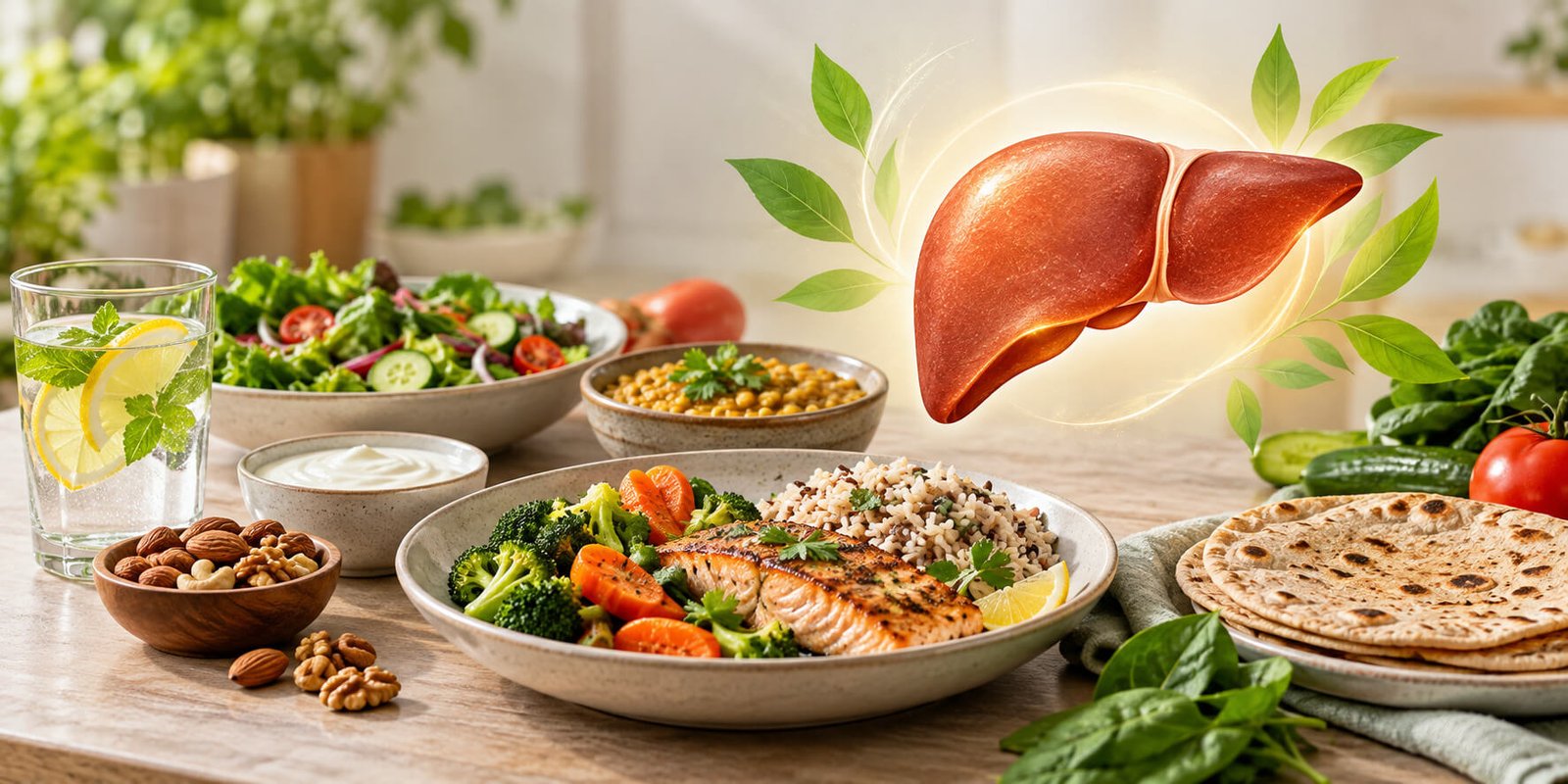
A useful approach is to combine your rice with protein, vegetables, and a moderate amount of cooking fat.
For example:
- Rice with chicken salan and kachumber
- Rice with daal, mixed sabzi, and plain dahi
- Grilled fish with rice and salad
- Keema with a moderate rice portion and vegetables
- Chicken pulao with raita and a generous salad
Protein helps make the meal more satisfying, while vegetables add fiber and volume. This can make it easier to feel comfortable with a moderate rice portion instead of needing several servings.
Watch the Oil, Not Just the Rice
One of the most common mistakes during weight loss is carefully measuring rice while ignoring everything else on the plate.
A cup of plain boiled rice and a cup of heavily oiled pulao are not nutritionally identical. The same applies when rice is eaten with a salan containing large amounts of oil or ghee.
You do not need completely oil-free Pakistani food. But if weight loss has stalled, it can be useful to look at cooking oil, fried ingredients, sauces, sugary drinks, and second servings before deciding that rice itself must be removed.
This same principle applies to roti. If you regularly alternate between the two staples, understanding how many rotis can fit into a weight loss diet can help you manage portions without unnecessarily banning either food.
Is White Rice Okay for Weight Loss?
Yes. White rice can still be included while you are trying to lose weight.
White rice contains less fiber than brown rice, which means some people may find brown rice slightly more filling. That does not make white rice a “bad” food or mean that you have to replace basmati rice with brown rice at every meal.
If you enjoy white basmati rice, focus on portion size and the overall meal. Adding chicken, fish, daal, beans, vegetables, or yogurt can make the meal more balanced and satisfying.
A food does not have to be the highest-fiber option available to have a place in a healthy diet.
Is Brown Rice Better Than White Rice at Night?
Brown rice provides more fiber because more of the grain remains intact. For some people, that can help with fullness and make portion control easier.
But switching from white rice to brown rice does not automatically produce weight loss.
If you eat a very large serving of brown rice simply because it feels healthier, you may still consume more energy than you need. The type of rice matters less than many people assume when compared with your overall portions and eating pattern.
Choose the rice you enjoy and can realistically continue eating in appropriate amounts.
Rice or Roti at Night: Which Is Better for Weight Loss?
Neither rice nor roti automatically causes better weight loss.
Whole wheat roti usually contains more fiber than white rice and may keep some people fuller. Rice, on the other hand, can be easy to portion and may suit certain meals or personal preferences better.
The comparison also depends heavily on serving size. One moderate bowl of rice may fit your needs better than three large rotis with ghee. For someone else, one or two medium rotis may feel more satisfying than rice.
There is no need to choose one forever. You can eat roti on some days and rice on others.
Can Not Eating Rice at Night Help You Lose Weight?
It can, but probably not for the reason you think.
If you normally eat a very large amount of rice at dinner and removing some of it reduces your total calorie intake, your weight may decrease. That does not mean nighttime rice was uniquely responsible for weight gain.
The problem comes when rice is removed but replaced with several rotis, fried foods, snacks, desserts, or large portions of another food. In that case, your overall energy intake may stay the same or even increase.
Weight loss should focus on the whole eating pattern rather than one ingredient.
Can Avoiding Rice Completely Backfire?

Sometimes.
If you genuinely enjoy rice but force yourself to eat tiny, unsatisfying dinners, you may spend the rest of the evening thinking about food. This can lead to biscuits with tea, chips, sweets, takeout, or repeated trips to the kitchen.
A balanced meal containing a controlled rice portion, adequate protein, and vegetables may actually be easier to maintain.
Sustainable weight loss is rarely about choosing the smallest dinner possible. It is about finding portions that help you make progress without feeling constantly deprived.
What About Biryani and Pulao?
Biryani and pulao can also fit occasionally, but they are different from plain boiled rice.
These dishes often contain additional oil or ghee, fried onions, meat, potatoes, and larger serving sizes. That can make them considerably more calorie-dense.
You still do not need to label them forbidden foods. A moderate serving with salad and raita can be easier to fit into your routine than a large restaurant or wedding-sized plate.
If biryani is one of the foods you find hardest to manage while dieting, there are practical ways to eat biryani while losing weight without treating it as a cheat meal.
Can You Eat Rice at Night With PCOS or Insulin Resistance?
Having PCOS or insulin resistance does not automatically mean you must remove rice.
The amount of carbohydrate, the rest of the meal, your activity level, blood glucose response, medications, and individual health needs all matter.
For example, a moderate serving of rice with chicken, vegetables, salad, and dahi creates a different meal from a large plate of rice eaten mostly on its own.
If insulin resistance is part of your health picture, a Pakistani eating approach for insulin resistance can still include familiar foods such as rice, roti, daal, sabzi, and fruit while paying more attention to portions, protein, and fiber.
People with diabetes or other conditions affecting blood glucose may need more individualized carbohydrate guidance.
Do You Need to Finish Dinner Before 7 PM?
No universal rule says that everyone trying to lose weight must finish dinner before 7 PM.
Your schedule matters. Someone who works until late evening may naturally eat dinner later than someone who finishes work at 4 PM.
Instead of chasing a perfect dinner time, try to avoid making your evening meal unnecessarily heavy and give yourself some time to digest before sleeping when possible.
If late-night hunger is a regular problem, look at the entire day. Skipping breakfast, eating a very small lunch, or getting too little protein and fiber earlier can leave you extremely hungry by night.
A More Practical Way to Think About Rice
Dr. Noor’s approach to nutrition is built around making everyday Pakistani food work for your health rather than handing you a list of foods you can never eat. Personalized nutrition should consider your routine, preferences, health history, activity, and goals instead of using the same rice or roti rule for everyone. Online consultations are available for people across Pakistan who need a plan tailored to their individual needs.
When you look at your dinner, ask:
- Is my rice portion reasonable?
- Do I have enough protein?
- Are there vegetables or salad?
- How much oil is in the meal?
- Am I comfortably full, or simply eating another serving because it is there?
These questions are much more useful than asking whether rice becomes unhealthy after sunset.
The Bottom Line
You do not need to avoid rice at night to lose weight.
Rice can comfortably fit into a weight loss diet when the portion suits your needs and the meal includes enough protein, vegetables, and other nutritious foods. White rice, basmati rice, brown rice, roti, and even occasional biryani can all have a place without stopping your progress.
Focus less on banning familiar foods and more on how much you eat, what you pair them with, how the meal fits into your day, and whether your eating routine is something you can realistically maintain.
FAQs
Can I Eat Rice at Night for Fat Loss?
Yes. Rice can be included at dinner during fat loss. Your total energy intake, rice portion, meal composition, and overall eating habits matter more than simply eating rice at night.
Does Eating Rice After 9 PM Cause Weight Gain?
Not automatically. Eating after 9 PM does not directly cause fat gain, although frequent heavy late-night meals and snacking can make it easier to consume more calories than you need.
How Much Rice Should I Eat at Dinner for Weight Loss?
Around ½ to 1 cup of cooked rice can be a practical general starting range for many people, but your appropriate portion depends on your energy needs, activity, body size, health conditions, and the rest of your diet.
Is Rice or Roti Better for Weight Loss?
Neither is automatically better. Whole wheat roti provides more fiber than white rice, but both can fit into a weight loss diet when portions are appropriate and the rest of the meal is balanced.
Can I Eat White Rice Every Day and Still Lose Weight?
Yes. Daily white rice can fit into a weight loss routine if your portion and overall calorie intake remain appropriate. Pair it with protein, vegetables, daal, beans, salad, or yogurt instead of relying on rice as most of the meal.
Should I Stop Eating Rice if I Have PCOS?
Not necessarily. PCOS does not automatically require you to eliminate rice. Portion size, protein, fiber, overall carbohydrate intake, insulin resistance, medications, and your individual nutritional needs should all be considered.